June 20, 2026 was a genuinely packed day across every section of your GK syllabus. India's cybercrime ecosystem got two powerful new tools as the I4C launched the Grievance Redressal Mechanism and Money Restoration Module. A remarkable Indian jurist, Bimal N. Patel, was elected to the International Tribunal for the Law of the Sea — a landmark in India's international legal standing. The government's move to constitute a National Sports Board under Cabinet Secretary TV Somanathan signals a new era for sports governance. India's peak power demand hit an extraordinary 270.8 GW in May 2026, revealing both the energy stress and the infrastructure ambitions ahead. A new spider species was discovered in Meghalaya. The LWE-affected districts in India shrank from 126 in 2014 to just 2 in 2026. And Indian physicist Jainendra K. Jain won the Wolf Prize in Physics — becoming the first Indian-origin laureate in that category. Let's get into every story.
Governance & Internal Security
LWE-Affected Districts Shrink from 126 to Just 2 — The Numbers Behind India's Naxal-Free Claim
You'll remember that Home Minister Amit Shah declared India "Naxal-free" from Bastar back in May 2026. The detailed data behind that declaration kept emerging through June — and on June 20, InsightsOnIndia compiled the most comprehensive statistical picture yet of what India actually achieved.
The numbers tell a genuinely remarkable story. At the peak of Left-Wing Extremism in 2014, India had 126 districts classified as LWE-affected, covering large parts of Chhattisgarh, Jharkhand, Odisha, Andhra Pradesh, Telangana, Maharashtra, and Bihar. By March 2026, that number had fallen to just 2 districts. Naxal-related violent incidents dropped from 870 in 2014 to 234 in 2025, and annual fatalities fell from 310 to 100 over the same period.
What broke the movement wasn't just military operations — it was a three-pillar strategy that the Ministry of Home Affairs formally articulated as Vishwaas (Trust), Nirman (Development), and Jan Kalyan (Public Welfare). The NIA physically seized over ₹40 crore in Naxal assets and the Enforcement Directorate attached ₹12 crore, cutting off financial networks. But equally important was the wave of surrenders — 3,927 active cadres surrendered between 2024 and March 2026, with 2,337 laying down arms in 2025 alone, driven by generous rehabilitation packages.
The underlying story is about tribal communities finally getting what they were always owed — roads under PMGSY, banking under PMJDY, forest rights under FRA 2006, and healthcare access. The Naxal movement had thrived precisely because these basics were absent for decades.
I4C Launches Two New Cybercrime Portals — GRM and MRM
If you've ever wondered what happens to your money after a cybercrime — and why it seems so impossible to get it back — these two new portals are designed specifically to fix that.
The Indian Cyber Crime Coordination Centre (I4C) under the Ministry of Home Affairs launched the Grievance Redressal Mechanism (GRM) and the Money Restoration Module (MRM) on June 20, 2026. The announcement emerged from a high-level review meeting chaired by Union Home Minister Amit Shah on the functioning of the national cybercrime helpline 1930.
Here's the problem these portals solve. When someone commits financial cybercrime — say, a fraudulent UPI transfer or an online scam — police investigations often result in bank accounts being frozen, placed under lien, or put on hold as part of the evidence-gathering process. The trouble is, sometimes innocent account holders get caught in this net and their money gets frozen even though they weren't involved in the fraud. The GRM portal gives these innocent account holders a structured way to file complaints and seek restoration of their accounts.
The MRM portal tackles a different problem — when fraud money is actually recovered by law enforcement, victims have historically had no easy way to claim it back. The MRM creates a direct, transparent channel for fraud victims to seek return of recovered money through the National Cyber Crime Reporting Portal (NCRP).
Together, these portals directly coordinate police forces, banking networks, and the NCRP — making India's cybercrime response machinery significantly more victim-friendly.
National Sports Board — Cabinet Secretary TV Somanathan to Head Selection Committee
India's National Sports Governance Act, 2025 created a new institutional architecture for sports administration — and June 20 saw that architecture begin to take shape.
The government constituted a Search-cum-Selection Committee under Cabinet Secretary Dr. TV Somanathan to recommend names for the Chairperson and members of the newly formed National Sports Board (NSB). Once constituted, the NSB will serve as the apex body for granting recognition to National Sports Federations and ensuring they comply with governance, financial, and ethical norms.
The committee's composition is noteworthy — it includes the Secretary of the Ministry of Youth Affairs and Sports, an Indian Olympic Association nominee, Olympic shooter Gagan Narang, and retired Lt Gen Harpal Singh as a sports administrator. This blend of bureaucratic, administrative, and practitioner representation is deliberate — the new governance law was specifically designed to bring more athlete voices into sports administration.
The National Sports Governance Act 2025 itself was a landmark — it replaced the old National Sports Development Code and gave statutory backing to accountability measures that previously existed only as ministry guidelines. Sports federations that don't comply with NSB norms can now lose government recognition and funding under legally binding provisions.
Katchatheevu — Sri Lankan MP Visits Chennai, Calls Sovereignty "Settled"
Few topics generate as much heat in Tamil Nadu's political discourse as Katchatheevu — and it was back in the news on June 20 when Sri Lankan Member of Parliament Rauff Hakeem visited Chennai on a goodwill visit and asserted that "the sovereignty of Katchatheevu is a completely settled matter under international law and bilateral pacts."
Katchatheevu is a small, uninhabited island in the Palk Strait between Tamil Nadu and Sri Lanka's Northern Province. It has no permanent civilian population and no natural freshwater — but it does have the historic St. Antony's Church, which hosts an annual two-day festival that Indian pilgrims can attend without a passport or visa. That pilgrim access is the only concession India retained.
The island's legal status was settled by bilateral maritime boundary agreements between India and Sri Lanka signed in 1974 and 1976 — where India formally recognised Sri Lankan sovereignty. The political controversy in India arises from the fact that this was done without Parliamentary approval, and Tamil fishing communities argue that the island's surrounding waters were historically Indian fishing grounds. Rakeem's statement reaffirmed Sri Lanka's position — that the matter is legally closed under current international law and any re-examination would require approaching the United Nations.
Economy & Finance
RBI Relaxes Capital Requirements for ECLGS 5.0 Loans
Banks got a meaningful regulatory reprieve on June 20 when the Reserve Bank of India relaxed capital requirements for loans backed by the Emergency Credit Line Guarantee Scheme (ECLGS) 5.0.
Under normal banking regulations, loans require banks to maintain a certain level of capital against them — based on the risk weight assigned to that loan category. The RBI's relaxation means that ECLGS 5.0-backed loans will attract lower risk weights, reducing the capital banks need to set aside and freeing up more money for lending.
This is particularly significant because ECLGS 5.0 covers both MSMEs and airlines — two sectors still managing the aftershocks of the West Asian energy crisis, high fuel costs, and elevated borrowing rates. Airlines especially benefit — their 7-year repayment tenor under ECLGS 5.0 combined with this capital relaxation makes bank lending to aviation more attractive at a time when Indian carriers are managing higher operational costs.
The ECLGS programme has been a fixture of India's crisis response toolkit since its original launch in May 2020 under the Atmanirbhar Bharat package. ECLGS 5.0 is administered through the National Credit Guarantee Trustee Company Limited (NCGTC).
India's Peak Power Demand Hit 270.8 GW in May 2026 — Grid Under Stress
India's electricity grid reached a new milestone — and a new challenge — simultaneously. Peak power demand hit 270.8 GW in May 2026, according to data highlighted in June 20 policy discussions. To put that in perspective, India's total installed generation capacity is 520.51 GW (covered earlier in May current affairs) — but installed capacity and available capacity at peak are very different numbers.
The surge was driven by a brutal combination — the record heatwave (97 of 100 world's hottest cities were in India on one day in May), accelerating urban cooling demand from air conditioners, and India's expanding EV charging loads. The grid managed the demand without major nationwide blackouts — a genuine operational achievement — but distribution companies (DISCOMs) in several states resorted to load shedding in rural and peri-urban areas.
This peak demand figure is important for a specific reason. India's NDC (Nationally Determined Contribution) under the Paris Agreement targets 500 GW of non-fossil capacity by 2030 — but the real test is whether that capacity can meet peak demand reliably. Solar and wind don't generate at night or during calm weather — so the transition to renewables requires parallel investment in grid storage, pumped hydro, and smart grid technology to handle peak loads.
National Statistical Commission — New Chairperson Appointed
The government appointed a former IIM Calcutta director as the new Chairperson of the National Statistical Commission (NSC) following a recommendation from the Search-cum-Selection Committee.
The NSC is one of those institutions that doesn't get much public attention but is quietly crucial. It was established through a Government of India resolution on June 1, 2005 (coming into effect July 12, 2006) based on the recommendations of the Rangarajan Commission (2001). Its job is to ensure the accuracy, integrity, and international comparability of India's official statistics — from GDP data to health surveys to agricultural output.
The Commission has a part-time Chairperson, four part-time technical members, one permanent ex-officio member, and a Secretary. Its oversight role includes reviewing the methodologies of surveys like the PLFS (Periodic Labour Force Survey), the NSS (National Sample Survey), and the NFHS (National Family Health Survey) — the data that drives everything from poverty estimates to MGNREGA (now VB-G RAM G) wage policy.
International Affairs & Diplomacy
Indian Jurist Bimal N. Patel Elected ITLOS Judge for 2026–2035
This is one of those appointments that looks small on the surface but carries enormous strategic weight — and June 20 was when it was formally confirmed.
Bimal N. Patel, a renowned Indian jurist and international law scholar, was elected as a judge of the International Tribunal for the Law of the Sea (ITLOS) for the 2026-2035 term.
ITLOS is a specialized UN tribunal established under the UN Convention on the Law of the Sea (UNCLOS) — it adjudicates disputes between states over maritime boundaries, fishing rights, deep-sea mining, and freedom of navigation. With the Indo-Pacific increasingly becoming a contested maritime space — South China Sea disputes, India's EEZ claims, and the ongoing Strait of Hormuz situation — having an Indian judge at ITLOS is not just a matter of prestige, it's a matter of strategic influence.
Bimal N. Patel is well known in international law circles — he has been involved in significant international arbitration cases and has deep expertise in international environmental law and law of the sea. His 9-year term gives India a sustained presence at this critically important forum at exactly the moment when maritime law and ocean governance are becoming central to global geopolitics.
EU Return Regulation — Implications for Indian Diaspora in Europe
The European Parliament passed the Return Regulation on June 17, 2026 — and its implications were being widely discussed on June 20, particularly for Indian nationals living and working in Europe.
The Return Regulation permits EU member states to set up offshore deportation centres ("return hubs") in non-EU countries, allowing the EU to process and deport irregular migrants from outside its territory. This has sparked intense debate — human rights organisations have challenged it as outsourcing border enforcement while bypassing protections under EU and international law.
For India, the EU has indicated it may seek stronger readmission arrangements — formal bilateral agreements requiring India to accept the prompt return of Indian nationals ordered to leave Europe. India currently has readmission agreements with several EU states, but the EU wants more comprehensive, faster-functioning arrangements. Given that India has a large diaspora in Europe (particularly in the UK, Germany, Netherlands, Italy, and Spain), this is a live bilateral issue.
Science & Technology
Jainendra K. Jain Wins Wolf Prize in Physics — First Indian-Origin Laureate
This deserves more attention than it typically gets in Indian current affairs coverage — because the Wolf Prize is genuinely one of physics' highest honours, second only to the Nobel in many physicists' estimation.
Jainendra K. Jain, an Indian-American theoretical physicist at Pennsylvania State University, won the Wolf Prize in Physics 2026 — becoming the first person of Indian origin to win the Wolf Prize in Physics.
Jain is celebrated for developing the theory of Composite Fermions — a groundbreaking framework that explained the Fractional Quantum Hall Effect (FQHE), one of condensed matter physics' most puzzling phenomena. The FQHE was discovered in 1982 (Nobel Prize to Tsui, Störmer, and Laughlin in 1998) — Jain's composite fermion model provided the elegant theoretical explanation for why electrons in a two-dimensional system under strong magnetic fields behave as if they are entirely different particles.
New Lynx Spider Discovered in Meghalaya — Hamataliwa mawlyngot
Scientists from the Zoological Survey of India (ZSI) and the University of Calcutta discovered a new species of lynx spider — Hamataliwa mawlyngot — from Mawlyngot village in East Khasi Hills, Meghalaya. The findings were published in the National Academy Science Letters.
What makes this particularly interesting is that it marks the first recorded presence of the genus Hamataliwa in Meghalaya — and also extends the known distribution of this genus across Asia. The species name "mawlyngot" is drawn from the village where it was found — continuing India's growing practice of honouring local geography and communities in scientific nomenclature.
Lynx spiders belong to the family Oxyopidae — they are free-ranging hunters that don't spin webs to catch prey but instead stalk and ambush insects on vegetation. They play an important role in natural pest control, particularly in agricultural landscapes.
The ZSI has been on a remarkable discovery run in 2026 — this is part of a broader push to document India's biodiversity more comprehensively, driven partly by the Kunming-Montreal Global Biodiversity Framework's 30x30 target which requires knowing what needs to be protected.
Smart Warehousing System Launched — Food Storage Gets a Digital Upgrade
India's food storage system got a significant upgrade when the Smart Warehousing System was launched by the Ministry of Consumer Affairs, Food and Public Distribution. The event also released three important publications — a "Practical Guide for Safe Grain Storage," a "Pocket Handbook for FPS Dealers," and "Anna and Algorithms: Advancing Next-Gen Governance in PDS."
The Smart Warehousing System aligns four major national initiatives simultaneously — Digital India, IndiaAI Mission, PM GatiShakti, and Atmanirbhar Bharat. At its core, it uses IoT sensors, AI-based monitoring, and digital dashboards to track temperature, humidity, pest activity, and grain quality in real time across warehouses managed by the Central Warehousing Corporation (CWC) and Food Corporation of India (FCI).
Why does this matter? India wastes an estimated 10-20 million tonnes of foodgrains annually due to poor storage — an extraordinary loss for a country where food security and reducing edible oil and food imports are pressing policy priorities. The "Anna and Algorithms" publication title itself reflects the government's vision of using AI to fix one of India's oldest and most stubborn logistics challenges.
The event also felicitated the Top 20 Performing Warehouses of CWC and FCI under the Depot Darpan framework — a digital performance rating system for warehouses.
Exercise KHAAN QUEST 2026 Begins — India in Mongolia
The Indian Army contingent of 40 personnel from a battalion of the JAT Regiment departed for Mongolia to participate in the 23rd edition of Exercise KHAAN QUEST — a multilateral military exercise held from June 20 to July 3, 2026 at the Five Hills Training Area, Ulaanbaatar, Mongolia.
KHAAN QUEST is a US-led multinational peacekeeping exercise that focuses on peace support operations under Chapter VII of the UN Charter. Chapter VII of the UN Charter authorises the Security Council to take enforcement action — including use of armed force — to maintain or restore international peace. Peacekeeping exercises under this framework train military personnel in the specific rules of engagement, coordination mechanisms, and interoperability standards needed for UN-mandated operations.
India's participation in KHAAN QUEST reflects its consistent contribution to UN peacekeeping missions — India is one of the largest contributors of troops to UN peacekeeping operations globally, with personnel deployed across Africa, the Middle East, and other conflict zones.
Mongolia is an interesting partner — a landlocked nation between China and Russia that actively pursues a "third neighbour" foreign policy by deepening ties with democratic nations like the US, India, Japan, and South Korea. India-Mongolia relations are warm — PM Modi declared India and Mongolia a "Strategic Partnership" during his 2015 Ulaanbaatar visit.
Environment & Climate
India's Climate Vulnerability — World Bank's 2.8% GDP Warning and Ground Realities
June 20 saw a comprehensive discussion of India's climate vulnerability — drawing on the World Bank's projection that India's GDP could shrink by 2.8% by 2050 due to climate shocks if no corrective action is taken.
The ground realities reinforcing this projection are already visible. India's peak electricity demand hit 270.8 GW in May 2026 — driven partly by an unprecedented heatwave. Over 280 million internal displacements between 2008 and 2023 globally were linked to weather disasters, according to the Internal Displacement Monitoring Centre (IDMC). India's groundwater depletion rate is at a critical level in 61% of groundwater blocks according to the Central Ground Water Board (CGWB) — threatening the agricultural productivity that employs over 40% of India's workforce.
What's encouraging, though, is the documented evidence of successful adaptation. Andhra Pradesh's Community Natural Farming (APCNF) covers 6.3 lakh farmers and provides a scalable climate-resilient agriculture model. Ahmedabad's Heat Action Plan — developed after the 2010 heatwave killed over 1,300 people — reduced heatwave mortality by 30% between 2010 and 2015, proving that early warning systems and cool shelters genuinely save lives when properly implemented.
NIXI Celebrates 23rd Foundation Day — Internet Infrastructure Milestone
The National Internet Exchange of India (NIXI) celebrated its 23rd Foundation Day on June 19, 2026 — and the significance of what NIXI does kept getting discussed on June 20.
NIXI is a not-for-profit organisation under the Ministry of Electronics and Information Technology (MeitY), established under Section 8 of the Companies Act, 2013. Its core job is to facilitate the exchange of domestic internet traffic among Internet Service Providers — so that when you send a message from a Jio number to an Airtel number in the same city, the data doesn't have to travel to a server in Singapore and back. NIXI keeps that traffic local, making Indian internet faster, cheaper, and more secure.
Beyond traffic routing, NIXI manages India's country-code top-level domains — .IN and .भारत (Bharat in Devanagari) — supporting domain names in 22 Indian languages. It now operates 79 Internet Exchange Points (IXPs) across India — a dramatic expansion from its early years and a key piece of infrastructure behind India's digital economy growth.
Eurosatory 2026 — India's Defence Exports Take Centre Stage in Paris
Eurosatory 2026 — the premier biennial international exhibition for land and air-land defence systems — was held in Paris, France from June 15-19, 2026. India's participation and the reception of its defence products kept generating discussion on June 20.
Eurosatory is where the global defence procurement community meets — government delegations, military planners, and industry players from over 60 countries evaluate the latest systems. India's presence at Eurosatory 2026 was significant for several reasons. Indian defence manufacturers — including DRDO-backed companies, HAL, BEL, and private sector players like Tata Advanced Systems and L&T — showcased products including the ULPGM-V3 system (the UAV-launched precision guided missile we covered in May), Akash missile systems, and indigenous electronic warfare platforms.
The broader context is India's ₹39,000 crore defence export figure — a number that would have seemed fantastical a decade ago when India was importing nearly everything. Eurosatory gives Indian defence products global exposure at exactly the right moment — as the Russia-Ukraine conflict and West Asian crisis have created urgent demand for reliable, affordable defence technology from democratic suppliers.
FAQs — 20 June 2026 Current Affairs
Q. What are the GRM and MRM portals launched by I4C?
The Grievance Redressal Mechanism (GRM) helps bank account holders whose accounts were wrongly frozen during cybercrime investigations get their accounts restored. The Money Restoration Module (MRM) helps actual fraud victims claim back money that law enforcement has recovered. Both are launched by the Indian Cyber Crime Coordination Centre (I4C) under the Ministry of Home Affairs, and work through the National Cyber Crime Reporting Portal (NCRP). The national cybercrime helpline is 1930.
Q. Who is Bimal N. Patel and why is his ITLOS election significant?
Bimal N. Patel is a renowned Indian jurist and international law scholar elected to the International Tribunal for the Law of the Sea (ITLOS) for the 2026-2035 term — making him the most prominent Indian presence at this UN maritime court. ITLOS was established under UNCLOS (1982) and adjudicates disputes over maritime boundaries, fishing rights, and ocean governance. His election gives India strategic influence at a forum increasingly central to Indo-Pacific geopolitics.
Q. What is the Wolf Prize and why is Jainendra K. Jain's win historic?
The Wolf Prize is awarded by the Wolf Foundation in Israel across six fields and is widely considered second only to the Nobel Prize. It was established in 1978. Jainendra K. Jain, an Indian-American theoretical physicist at Penn State, won the 2026 Wolf Prize in Physics — becoming the first person of Indian origin to receive this honour. He is celebrated for developing the theory of Composite Fermions, which explained the Fractional Quantum Hall Effect.
Q. What is Exercise KHAAN QUEST?
KHAAN QUEST is a US-led multinational peacekeeping exercise held annually in Mongolia. The 23rd edition runs from June 20 to July 3, 2026 at the Five Hills Training Area in Ulaanbaatar. India participates with 40 personnel from the JAT Regiment. The exercise trains militaries in peace support operations under UN Charter Chapter VII — which authorises enforcement action for international peace and security.
Q. What is the National Sports Board and who will oversee its formation?
The National Sports Board (NSB) is the apex body for granting recognition to National Sports Federations under the National Sports Governance Act, 2025. Cabinet Secretary Dr. TV Somanathan chairs the Search-cum-Selection Committee that will recommend its Chairperson and members. The committee also includes Gagan Narang (Olympic shooter) and an IOA nominee — blending administrative and practitioner representation.
Q. What is Hamataliwa mawlyngot?
A newly discovered species of lynx spider (family Oxyopidae) found in Mawlyngot village, East Khasi Hills, Meghalaya — by scientists from the Zoological Survey of India (ZSI) and University of Calcutta. It is the first recorded presence of the genus Hamataliwa in Meghalaya. The findings were published in National Academy Science Letters. Lynx spiders are free-ranging hunters that contribute to natural pest control.
Written by
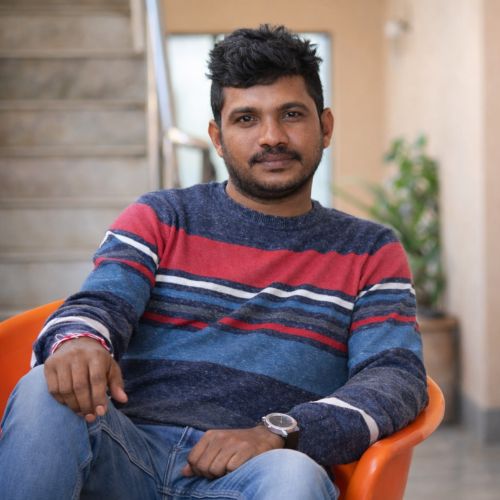
Koti Deva
Digital Marketing Specialist
Koti is a Digital Marketing Specialist with over 10 years of experience and the co-founder of MCQ Orbit — a free exam prep platform built for Indian competitive exam aspirants.
With strong personal knowledge in Quantitative Aptitude, Logical Reasoning, and Mathematics, Koti has a deep understanding of what it takes to crack exams like SSC CGL, IBPS PO, SBI Clerk, UPSC Prelims, NEET, and JEE. Having followed these exams closely for years, he understands the exact topics, patterns, and shortcuts that matter most.
MCQ Orbit was born from a simple desire — to build a platform where every aspirant in India can practice quality MCQs, read reliable current affairs, and prepare confidently, without paying a rupee. Koti combines his digital expertise with his passion for competitive exams to create content that is accurate, practical, and genuinely useful for students.
His mission is straightforward: if the right guidance had been freely available earlier, more students would have cracked their dream exams. MCQ Orbit is his way of making that happen.
Comments
No comments yet.