If you're reading this the night before Prelims, good — because everything in today's edition matters. Let's walk through what happened on May 21, and why each story could show up on your paper.
Important Days
World Metrology Day 2026 — "Metrology: Building Trust in Policy Making"
Every year on May 20, the world observes World Metrology Day. The date isn't random — it marks the anniversary of the Metre Convention, signed on May 20, 1875, which gave the world a shared system of measurement. This year's theme, "Metrology: Building Trust in Policy Making," is a reminder that good governance starts with accurate data.
Metrology, simply put, is the science of measurement. It sounds dry until you think about what breaks down without it — drug dosages go wrong, trade disputes multiply, climate data becomes unreliable. The organisation that keeps global measurement standards in check is the BIPM (Bureau International des Poids et Mesures), headquartered in Sèvres, near Paris. It works alongside OIML to jointly organise World Metrology Day.
Fact | Detail |
|---|---|
Observed on | May 20 every year |
Commemorates | Signing of the Metre Convention, May 20, 1875 |
Organised by | BIPM + OIML jointly |
BIPM HQ | Sèvres, near Paris |
2026 Theme | "Metrology: Building Trust in Policy Making" |
What India did in 2026: India wasn't just observing the day — it actually introduced meaningful reforms. The e-Maap portal now allows online registration and licensing of weighing and measuring instruments. Minor legal metrology offences have been decriminalised — small traders who make honest mistakes won't face criminal prosecution anymore, just civil penalties. And then there's One Nation, One Time — a joint initiative by ISRO and the National Physical Laboratory (NPL) to synchronise time standards across India. This matters more than it sounds: everything from digital payments to power grids to satellite navigation depends on precision timekeeping.
The NPL, based in New Delhi, is India's primary metrology institute and functions under CSIR.
International Tea Day — May 21
Tea is one of those things India takes quietly seriously. The United Nations General Assembly made it official in 2020 by establishing International Tea Day on May 21 — and it was India that first proposed the idea at the FAO, recognising how deeply tea connects to rural livelihoods and smallholder farming.
Here's where India stands in the global tea picture:
2nd largest tea producer in the world, right after China
2nd largest consumer as well
Assam leads domestically, contributing roughly 50% of India's total tea output
Darjeeling Tea holds a GI (Geographical Indication) tag — notably, it was the first Indian product to receive a GI tag in Europe
India exports around 250 million kg annually, mainly to Russia, UAE, UK, USA, and Iran
The sector is governed by the Tea Board of India, a statutory body under the Ministry of Commerce, operating under the Tea Act, 1953.
Fact | Detail |
|---|---|
Observed on | May 21 every year |
Established by | UNGA |
First observed | 2020 |
Proposed by | India (at FAO) |
Purpose | Promote sustainable tea production and consumption |
International Affairs & Diplomacy
PM Modi Returns from Five-Nation Tour — India-Italy Special Strategic Partnership + FAO Agricola Medal
PM Modi just wrapped up one of his most significant foreign tours in recent memory — five countries, multiple awards, and some genuinely consequential agreements. Here's the full picture:
Stop | Country | Key Achievement |
|---|---|---|
1 | UAE (stopover) | Petroleum storage deal, green hydrogen |
2 | Netherlands | Strategic Roadmap 2026–30, ASML partnership, Anaimangalam plates returned |
3 | Sweden | Royal Order of Polar Star, Strategic Partnership |
4 | Norway | Grand Cross Order of Merit, Green Strategic Partnership, India-Nordic Summit |
5 | Italy | Special Strategic Partnership, FAO Agricola Medal, IMEC reaffirmed |
The Italy stop is the one to focus on. India and Italy upgraded their relationship to a Special Strategic Partnership — a significant diplomatic elevation — and announced a bilateral trade target of €20 billion by 2029, backed by the newly concluded India-EU Free Trade Agreement.
Some of the more interesting outcomes:
A Critical Minerals MoU — to recover rare materials from electronic waste and mine tailings
A Defence Industrial Roadmap covering joint design and co-production of helicopters, naval platforms, marine armament, and electronic warfare systems
IMEC reaffirmed — both nations committed to the India-Middle East-Europe Economic Corridor, with the first IMEC Ministerial meeting scheduled for later in 2026
INNOVIT India — a dedicated innovation hub for AI, quantum computing, fintech, and semiconductors
"Italy Calls India" — a programme placing Indian students into Italian universities and corporate internships
A law enforcement framework linking India's Enforcement Directorate (ED) with Italy's Guardia di Finanza to fight money laundering and terror financing
Indian researchers will now have direct access to the Elettra Synchrotron in Trieste
What is the Elettra Synchrotron?
It's a particle accelerator in Trieste that produces intense X-rays and UV light used in cutting-edge research — from drug discovery and semiconductor development to the non-destructive analysis of ancient artefacts. Indian researchers getting access to this is a genuine boost for materials science and pharmaceutical R&D.
Why does IMEC matter so much?
The India-Middle East-Europe Economic Corridor was announced at the G20 New Delhi Summit in September 2023. It's essentially a connectivity project running from India to the Middle East by sea, and then overland through the UAE, Jordan, Israel, and Greece into Europe. It's widely seen as a strategic counter to China's Belt and Road Initiative (BRI). Italy's reaffirmation carries extra weight because Italy was previously the only G7 nation to have joined BRI (in 2019), before withdrawing in 2023.
Italy at a glance: Capital = Rome. PM = Giorgia Meloni (Brothers of Italy, since 2022). G7 member. EU founding member (Treaty of Rome, 1957). NATO member since 1949. 3rd largest EU economy.
FAO Agricola Medal — PM Modi Receives Agriculture's Highest UN Honour
In Rome, PM Modi received the FAO Agricola Medal — the highest institutional award given by the Food and Agriculture Organization of the United Nations.
The name comes from "Agricola" — Latin for farmer. The medal was established by the FAO in 1977 and is awarded directly by the FAO Director-General to leaders who have made a transformative difference in global food security, tied to SDG 2 (Zero Hunger).
Fact | Detail |
|---|---|
Full name | FAO Agricola Medal |
Name origin | "Agricola" = Latin for farmer |
Established | 1977 |
Awarded by | FAO Director-General |
SDG linkage | SDG 2 (Zero Hunger) |
Indian recipients | Dr. Manmohan Singh (2008) + PM Narendra Modi (2026) |
Why PM Modi?
The FAO recognised his government's work across several programmes: PM-KISAN (₹6,000/year direct support to over 11 crore farmers), PM Fasal Bima Yojana (crop insurance for 5+ crore farmers), the push for natural farming, the promotion of millets (India led the International Year of Millets in 2023), Jal Jeevan Mission, and fortified rice distribution under PDS.
About FAO: Founded October 16, 1945. HQ in Rome, Italy. DG = QU Dongyu (China, since 2019). 195 members (194 countries + EU). World Food Day = October 16 — the FAO's founding anniversary.
Exercise PRAGATI 2026 — Multilateral Military Exercise, Meghalaya
India kicked off Exercise PRAGATI 2026 at Umroi Military Station, Meghalaya, with participation from 12 friendly nations.
PRAGATI stands for Partnership of Regional Armies for Growth and Transformation in the Indian Ocean Region. The exercise focuses on counter-terrorism, jungle warfare, interoperability, and intelligence sharing — themes directly aligned with India's SAGAR doctrine and Act East Policy.
Fact | Detail |
|---|---|
Full form | Partnership of Regional Armies for Growth and Transformation in the Indian Ocean Region |
Venue 2026 | Umroi Military Station, Meghalaya |
Participating nations | 12 |
Focus areas | Counter-terrorism, jungle warfare, interoperability, intelligence sharing |
Strategic linkage | SAGAR doctrine + Act East Policy + Indo-Pacific outreach |
Constitutional basis | Article 51 — promotion of international peace |
Why Meghalaya?
The terrain says it all — dense subtropical forests, hilly landscape, and proximity to Myanmar and Bangladesh make Umroi ideal for jungle warfare and counter-terrorism training. The Northeast theatre is also strategically significant given China's assertiveness along the LAC and India's deepening engagement with Southeast Asia.
India's key multilateral exercises — a quick reference:
Exercise | Partner | Type |
|---|---|---|
Malabar | USA + Japan | Naval |
MILAN | Multiple navies | Naval (India hosts) |
PRAGATI 2026 | 12 nations | Multilateral land |
Shakti | France | Bilateral land |
Garuda Shakti | Indonesia | Bilateral land |
SAGAR stands for Security and Growth for All in the Region — PM Modi's 2015 Indian Ocean vision that positions India as a net security provider for the region. PRAGATI directly embodies that vision.
India Abstains on UNGA Climate Resolution — May 20, 2026
On May 20, India abstained on a United Nations General Assembly resolution on climate change obligations. The resolution passed with 141 votes in favour and 8 against.
This abstention isn't surprising if you understand India's consistent position on climate diplomacy. India supports climate action — but it draws a firm line at what it sees as an unfair shifting of burdens. The core principle here is CBDR-RC — Common But Differentiated Responsibilities and Respective Capabilities. The argument is straightforward: developed nations caused the bulk of historical emissions and should bear proportionally greater obligations. They also need to fulfil their climate finance commitments before new obligations are imposed on developing countries whose people still need access to energy and economic development.
On UNGA resolutions: Unlike UNSC resolutions (which can be legally binding under Chapter VII), UNGA resolutions are non-binding. But they carry real political weight — they signal global consensus and often shape future binding agreements.
Key climate frameworks to know:
UNFCCC (1992): The foundational framework; introduced CBDR principle
Kyoto Protocol (1997): First binding emission targets — only for developed countries
Paris Agreement (2015): NDC-based; 1.5°C target; universal but non-binding
COP 28 (2023, Dubai): First Global Stocktake — showed insufficient progress
COP 29 (2024, Baku): Climate finance — $300 billion/year by 2035
COP 30 (2025, Belém, Brazil): Most recent COP
India Raises Pakistan's Genocidal Acts at UNSC
On May 21, India used the UNSC Open Debate on Protection of Civilians in Armed Conflict to raise Pakistan's alleged genocidal acts — specifically those committed during the 1971 Liberation War of Bangladesh under Operation Searchlight, along with Pakistan's ongoing support for cross-border terrorism and the Pahalgam attack (April 2025) that killed 26 civilians.
Operation Searchlight (March 25, 1971): This was the Pakistan Army's crackdown on the Bengali civilian population of East Pakistan. Estimates of civilian deaths range from 1 to 3 million. India intervened militarily on December 3, 1971. Pakistani forces surrendered on December 16, 1971 — Bangladesh celebrates this date as Vijay Diwas (Victory Day). The genocide allegations have never been formally adjudicated at an international tribunal.
On UNSC Open Debates: Unlike regular UNSC sessions that address specific crises, Open Debates allow all UN member states to speak — including India, which is not currently a non-permanent UNSC member.
Xi-Putin Joint Statement — Opposing US-Israel War on Iran
China's President Xi Jinping and Russia's President Vladimir Putin issued a joint statement opposing US-Israel military action against Iran. This came despite the recent Trump-Xi summit in Beijing on May 14, signalling that Beijing and Washington found no alignment on the Iran question.
What this tells us: Russia and China have deep economic ties with Iran and a shared interest in opposing what they view as unilateral US military action. The joint statement accelerates the trend toward multipolarity — where the world order is no longer shaped exclusively by US-led coalitions.
India's position: True to its tradition of strategic autonomy, India has called for dialogue and diplomacy — neither endorsing the US-Israel position nor joining the Russia-China condemnation. This is India protecting its interests: energy imports, diaspora welfare, and trade route stability.
The SCO angle: India, China, Russia, Pakistan, Iran, and several Central Asian nations are all SCO (Shanghai Cooperation Organisation) members — a platform that may be used for Iran-related de-escalation outside the US-led framework.
India-South Korea Deepen Defence Ties
Indian Defence Minister Rajnath Singh visited Seoul to formalise deeper defence cooperation, building on the KIND-X framework (Korea-India Defence Accelerator) announced at the India-South Korea Summit.
The conversations covered several key areas:
K9 Vajra Howitzer — South Korea's artillery platform, already co-produced in India by L&T (Larsen & Toubro) under Make in India. Discussions centred on expanding the programme. 100 K9 Vajras have already been delivered to the Indian Army and are operational in Ladakh's high-altitude terrain.
Submarine technology — Potential collaboration with South Korea's DSME (Daewoo Shipbuilding and Marine Engineering) for India's next-generation submarine programme
Missiles and ammunition — Joint development under KIND-X
Naval shipbuilding — Cooperation between India's GRSE (Garden Reach Shipbuilders) and Korean shipyards
The K9 Vajra programme (2017) remains one of India's most successful Make in India defence stories — a proven template for what Korea-India industrial cooperation can look like.
AMD's $10 Billion AI Investment in Taiwan
Advanced Micro Devices (AMD) announced plans to invest over $10 billion in Taiwan's AI ecosystem, covering strategic partnerships and advanced packaging technology.
AMD is one of the world's largest chip designers — known for its EPYC data centre processors, Radeon GPUs, and Ryzen consumer CPUs. In AI, its MI300X accelerator directly competes with NVIDIA's H100/H200 chips.
Why Taiwan? Because TSMC (Taiwan Semiconductor Manufacturing Company) manufactures chips for AMD, Apple, NVIDIA, Qualcomm, and virtually every other major chip designer. This investment reflects AMD's push to deepen integration with TSMC's CoWoS (Chip-on-Wafer-on-Substrate) advanced packaging technology and capture more of the exploding AI chip market.
India's context here: India's own semiconductor mission is in progress — 12 projects approved — but the country remains heavily dependent on Taiwan for chip manufacturing. The AMD-Taiwan investment is a reminder of why India urgently needs domestic semiconductor manufacturing capacity.
Governance & Policy
JPC on One Nation One Election — Simultaneous Polls Could Save ₹7,000+ Crore
The Joint Parliamentary Committee (JPC) on One Nation One Election confirmed that holding simultaneous elections could save approximately ₹7,000+ crore — money currently spent repeatedly on security deployment, logistics, EVMs, and administrative machinery every time a state goes to polls.
What is ONOE? It proposes synchronising Lok Sabha and all State Assembly elections so they happen at the same time — ending the current reality where some state is almost always mid-election cycle.
The Kovind Committee's recommendation (March 2024): The High-Level Committee chaired by former President Ram Nath Kovind recommended a two-phase implementation:
Phase 1: Simultaneous Lok Sabha + State Assembly elections
Phase 2: Local body elections (Panchayat + ULBs) within 100 days of Phase 1
Another key benefit: The Model Code of Conduct (MCC) would apply only once every five years instead of being in force almost continuously as it is today — which currently freezes major policy announcements for large chunks of the year.
The constitutional challenge: ONOE isn't something that can be done by a simple majority. It requires amendments to multiple constitutional articles — Articles 83, 85, 172, 174, and 356 — and ratification by at least 50% of state legislatures.
Arguments against:
National issues could overshadow state-specific concerns in a simultaneous election
If a government falls mid-term, the entire cycle gets disrupted
Article 356 (President's Rule) would need to be invoked until the next scheduled election — potentially leaving states without elected governments for extended periods
India's GERD at 0.65% of GDP — Well Below Global Benchmarks
India's Gross Expenditure on Research and Development (GERD) stands at 0.65% of GDP — and when you put that number in global context, it's stark.
Country | GERD (% of GDP) |
|---|---|
Israel | ~5.6% |
South Korea | ~4.9% |
USA | ~3.5% |
China | ~2.4% |
Global Average | ~2.2% |
India | ~0.65% |
India's Target | 2% by 2030 |
GERD measures total domestic R&D spending — by government, industry, and academia — as a share of GDP. The number tells you how seriously a country invests in creating new knowledge and technology.
The biggest gap in India's case isn't government spending — it's private sector R&D. Indian industry invests far less in R&D compared to Korean giants like Samsung and LG or Chinese companies like Huawei and CATL. That's the structural challenge.
India's response — the Anusandhan NRF: The Anusandhan National Research Foundation, established under the NRF Act, 2023, has a ₹50,000 crore outlay over five years. Its goal is to fund competitive research grants, build university-industry-government linkages, and push private sector R&D investment — targeting 2% of GDP by 2030. It's modelled partly on the US National Science Foundation (NSF).
Pradhan Mantri Sangrahalaya — 3rd AI HoloBox Featuring Mahatma Gandhi
The Pradhan Mantri Sangrahalaya has launched its third AI HoloBox — this time featuring Mahatma Gandhi, allowing visitors to have AI-driven conversations with a life-like 3D holographic version of the Father of the Nation.
The museum, located at Teen Murti Bhavan in Delhi, was inaugurated by PM Modi on April 14, 2022 (Dr. Ambedkar Jayanti). It's India's first museum dedicated to all Prime Ministers — from Jawaharlal Nehru to the present.
The HoloBox technology combines generative AI (trained on the personality's writings and speeches), holographic projection, and conversational AI so visitors can genuinely interact with these figures.
Edition | Personality |
|---|---|
1st | Sardar Vallabhbhai Patel |
2nd | Dr. APJ Abdul Kalam |
3rd | Mahatma Gandhi |
Coming soon | Atal Bihari Vajpayee |
Worth noting: Gandhi was never a Prime Minister — but as the Father of the Nation and central figure of India's independence movement, his inclusion reflects the museum broadening its scope beyond strictly PM profiles.
APO — India Chairs Governing Body 2025–26
The Asian Productivity Organisation (APO), established in 1961 and headquartered in Tokyo, Japan, is an intergovernmental body that promotes sustainable development and productivity across the Asia-Pacific region. It has 21 member economies, and India is a founding member.
India currently holds the Governing Body Chairmanship for 2025–26 — coordinated domestically through the National Productivity Council (NPC), which functions under the Ministry of Commerce and Industry.
APO played a significant role in Asia's post-war economic development — spreading industrial productivity practices, including Japan's kaizen philosophy, across developing Asian economies.
S. Soma Somasegar — Indian-Origin Microsoft Leader Passes Away
S. "Soma" Somasegar — Indian-American technology executive and former Microsoft leader — passed away at the age of 59. He spent 27 years at Microsoft, rising to become Corporate Vice President of the Developer Division, where he oversaw the development of Visual Studio — Microsoft's flagship integrated development environment used by millions of developers worldwide.
After leaving Microsoft, he became a venture capitalist, investing in early-stage technology startups. His career stands as a landmark example of Indian-origin talent shaping global technology.
India's Urban Waste Collection Milestone — 97% Wards Covered
India has reached a significant milestone: 97% of urban wards now have door-to-door waste collection services — a number that reflects years of sustained effort under the Swachh Bharat Mission-Urban (SBM-U), launched on October 2, 2014 (Gandhi Jayanti).
Before SBM, waste collection was extremely patchy — large parts of secondary cities and smaller towns had no formal system at all. 97% coverage means reduced open dumping and burning, formal coverage by waste workers (safai karamcharis), better source segregation, and more reliable waste data for planning.
The work isn't done though. Only about 28–30% of collected waste is scientifically processed. Legacy dumpsites still need remediation. Source segregation compliance remains low. And waste-to-energy solutions — bioCNG, RDF, waste-to-power — need to be scaled significantly.
SBM-U has run in two phases: Phase 1 (2014–2021) focused on Open Defecation Free goals and basic solid waste management. Phase 2 (2021–2026) targets ODF Plus, Garbage-Free Cities, and scientific waste processing.
Global Housing Report — "The Global Housing Crisis: Pathways to Action"
UN-Habitat released a report titled "The Global Housing Crisis: Pathways to Action" — identifying three core challenges facing housing systems worldwide:
Affordability — In most major cities, housing costs have grown faster than incomes. The average city dweller now spends 30–40% of income on housing — above the 30% threshold considered "housing stressed."
Informality — Around 1.1 billion people live in informal settlements globally — slums, squatter settlements, and unplanned urban areas.
Climate vulnerability — Informal housing tends to be located in flood plains, coastal areas, and hillsides, making residents disproportionately exposed to climate disasters.
India's context: India has approximately 13.9 million urban households in slums (Census 2011 data — likely higher now). The government's response includes PMAY-U 2.0 (targeting 1 crore new urban houses) and PMAY-Urban, which has delivered 1.18 crore+ houses since 2015. The original Housing for All by 2022 target was partially achieved and has since been revised forward. This connects to SDG 11 — sustainable cities and communities.
FAQs — 21 May 2026 Current Affairs
Q. What are the key outcomes of PM Modi's Italy visit and the Special Strategic Partnership?
India and Italy elevated ties to a Special Strategic Partnership, setting a bilateral trade target of €20 billion by 2029, finalising a Defence Industrial Roadmap (helicopters, naval platforms, electronic warfare), reaffirming IMEC with the first ministerial meeting in 2026, signing a Critical Minerals MoU, launching INNOVIT India (AI + quantum + fintech hub), and the "Italy Calls India" student programme. Indian researchers also received access to the Elettra Synchrotron in Trieste. Italy's PM is Giorgia Meloni. Italy is a G7 member and EU founding member (Treaty of Rome, 1957).
Q. What is the FAO Agricola Medal and why did PM Modi receive it?
The FAO Agricola Medal is the highest institutional award of the Food and Agriculture Organization — established in 1977, named after "Agricola" (Latin for farmer), awarded by the FAO Director-General for transformative leadership in global food security (SDG 2). PM Modi received it in 2026; the previous Indian recipient was Dr. Manmohan Singh in 2008. FAO was founded October 16, 1945 (World Food Day), headquartered in Rome, with 195 members and DG QU Dongyu.
Q. What is Exercise PRAGATI 2026?
PRAGATI stands for Partnership of Regional Armies for Growth and Transformation in the Indian Ocean Region. The 2026 edition is at Umroi Military Station, Meghalaya, with 12 friendly nations. Focus areas: counter-terrorism, jungle warfare, interoperability, and intelligence sharing. Linked to India's SAGAR doctrine and Act East Policy. Article 51 of the Constitution provides the constitutional spirit for such exercises.
Q. What did the JPC on One Nation One Election report?
The JPC found that simultaneous elections could save over ₹7,000 crore. The Kovind Committee (March 2024) recommended two-phase ONOE: Phase 1 (LS + State Assemblies) and Phase 2 (local bodies within 100 days). Implementation requires constitutional amendments to Articles 83, 85, 172, 174, and 356, plus ratification by 50% of state legislatures.
Q. What is India's GERD and why does it matter?
India's GERD is ~0.65% of GDP — far below the global average of 2.2%, China's 2.4%, the USA's 3.5%, and South Korea's 4.9%. The Anusandhan NRF (NRF Act 2023, ₹50,000 crore over 5 years) aims to raise this to 2% by 2030. Low private sector R&D is India's biggest structural gap.
Q. Why did India abstain on the UNGA climate resolution?
India abstained (May 20, 2026) on a resolution adopted with 141 in favour and 8 against. India's position rests on the CBDR-RC principle — that developed nations, as historical emitters, bear greater obligations and must fulfil climate finance commitments before new burdens are placed on developing countries. UNGA resolutions are non-binding; the binding frameworks are UNFCCC (1992) and the Paris Agreement (2015).
Q. What is International Tea Day and India's role in it?
Observed on May 21, established by UNGA in 2020. India proposed the day at FAO to recognise tea's importance for smallholder farmers. India is the world's 2nd largest producer and consumer (China is 1st). Assam contributes ~50% of India's tea. Darjeeling Tea has a GI tag — first Indian product to receive one in Europe. Tea Board of India governs the sector under the Ministry of Commerce (Tea Act 1953).
Q. What is the Anusandhan National Research Foundation?
Established under the NRF Act, 2023, with a ₹50,000 crore outlay over five years. It aims to raise India's GERD from 0.65% to 2% of GDP by 2030 — by funding research grants, building university-industry-government linkages, and encouraging private sector R&D. It is modelled partly on the US National Science Foundation (NSF).
Written by
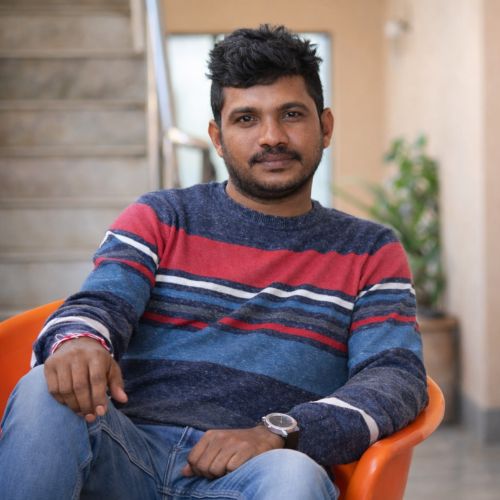
Koti Deva
Digital Marketing Specialist
Koti is a Digital Marketing Specialist with over 10 years of experience and the co-founder of MCQ Orbit — a free exam prep platform built for Indian competitive exam aspirants.
With strong personal knowledge in Quantitative Aptitude, Logical Reasoning, and Mathematics, Koti has a deep understanding of what it takes to crack exams like SSC CGL, IBPS PO, SBI Clerk, UPSC Prelims, NEET, and JEE. Having followed these exams closely for years, he understands the exact topics, patterns, and shortcuts that matter most.
MCQ Orbit was born from a simple desire — to build a platform where every aspirant in India can practice quality MCQs, read reliable current affairs, and prepare confidently, without paying a rupee. Koti combines his digital expertise with his passion for competitive exams to create content that is accurate, practical, and genuinely useful for students.
His mission is straightforward: if the right guidance had been freely available earlier, more students would have cracked their dream exams. MCQ Orbit is his way of making that happen.
Comments
No comments yet.