The day after UPSC Prelims 2026 — and the news cycle did not slow down for a moment. May 25 brought some genuinely significant stories that will matter for every competitive exam going forward. The biggest one is something lakhs of aspirants are directly experiencing right now — US President Donald Trump announced that a deal to end the West Asia conflict and reopen the Strait of Hormuz is largely negotiated, which immediately sent crude prices lower and gave India's foreign exchange situation some breathing room. Back home, the BHAVYA scheme for industrial smart cities got its operational guidelines — a ₹33,660 crore programme that could transform India's manufacturing geography. The Supreme Court referred the UAPA bail debate to a larger bench — a landmark constitutional moment on personal liberty. The NPT Review Conference opened, bringing India's complex relationship with nuclear non-proliferation back into focus. RBI lowered its CPI inflation forecast to 2.0% for FY26. And a critical marine plastics study covering 112 countries put India's coastal pollution challenge in sharp global context. Let's get into all of it.
International Affairs
Trump Announces Strait of Hormuz Deal — "Largely Negotiated," Implementation Pending
This is the story that India's energy planners, forex managers, and stock market traders were all watching with maximum attention on May 25.
US President Donald Trump announced that a draft agreement between the United States, Iran, and other partners to end the ongoing conflict and reopen the Strait of Hormuz has been "largely negotiated" and is now in the finalisation phase.
If this deal holds — and that "if" carries significant weight — it would be one of the most consequential diplomatic developments of 2026 for India. The Strait of Hormuz blockade has been running through this entire edition of current affairs since early May. It pushed global crude prices higher, triggered India's back-to-back fuel price hikes (three hikes, approximately ₹5 per litre total in ten days), widened the trade deficit, depleted forex reserves by nearly $88.5 billion from their February peak, and forced the RBI into repeated market interventions to defend the rupee.
The announcement of a deal being "largely negotiated" is not the same as a deal being done. In diplomatic language, "largely negotiated" means the broad outlines are agreed but details remain. Several previous announcements of ceasefire frameworks in this conflict have not materialised into durable agreements. But even the announcement of progress sent crude prices lower — which is itself economically significant for India, because every dollar that crude falls reduces India's annual import bill by thousands of crores.
Why the Strait matters so much to India specifically: India imports approximately 85% of its crude oil, and a large proportion of that transits through the Strait of Hormuz — the narrow channel between Iran and Oman through which roughly a fifth of the world's oil supply passes every day. India also has approximately 3.5 million citizens working in Gulf countries whose safety is directly affected by regional conflict. And India's own exports to and from the Gulf — pharmaceuticals, textiles, engineering goods — also route through these waters. Few countries in the world have as much riding on Hormuz stability as India does.
India-US High-Level Talks — Trade, Defence, Technology Cooperation
India and the United States held high-level discussions to re-energise ties, with External Affairs Minister-level talks focusing on trade, defence, and technology cooperation amid global geopolitical tensions.
These discussions — happening in the context of the Quad FM meeting outcomes and the ongoing West Asia crisis — covered three interlocking areas. On trade, India and the US have been negotiating a bilateral trade agreement for several years with limited progress. The Trump administration's tariff-first approach has complicated matters — India has been navigating US tariffs on steel, aluminium, and pharmaceutical products while simultaneously seeking preferential market access for its IT services and textiles.
On defence, the conversations built on the framework established by the India-US Comprehensive Global Strategic Partnership (2023) — covering ongoing cooperation on the iCET (Initiative on Critical and Emerging Technology), GE-414 jet engine co-production for India's Tejas Mk2 fighter, and the MQ-9B drone deal. The West Asian crisis has added urgency to these conversations — India's military has been on heightened readiness throughout, and interoperability with US systems matters in that context.
On technology, the conversation centred on the Quad CET framework agreed the previous day — specifically how bilateral India-US implementation would work for AI safety standards and semiconductor supply chain protocols.
US Ends Russia Oil Waiver — Direct Implications for India
The US ended the Russia oil waiver — with direct implications for India's interests.
This is a significant and underreported story that deserves careful attention. Since 2022, when Western sanctions were imposed on Russia following the Ukraine invasion, the US had been extending periodic "humanitarian" or "transition" waivers that allowed certain countries — including India — to continue purchasing Russian oil without triggering secondary US sanctions. These waivers have been a critical part of why India was able to massively scale up Russian crude imports (which were available at a significant discount to market prices) even as Western countries refused to buy Russian oil.
The termination of this waiver means India's continued purchase of Russian oil now technically puts Indian companies and banks at risk of US secondary sanctions under CAATSA and other measures. This is a direct pressure point — the US is essentially telling India: choose between Russian oil discounts and access to the US financial system.
India's response will be watched very carefully. Options include: routing payments through non-SWIFT, non-dollar channels (which India has been building through rupee-rouble trade mechanisms); reducing Russian oil share in the import basket; or diplomatically pushing back on the waiver termination through the India-US strategic partnership framework. This story will develop significantly over the coming weeks.
Security Incident Near White House — Suspect Killed
A security incident near the White House led to lockdown measures after a suspect allegedly opened fire near the complex and was later killed by security forces.
A security incident near the White House triggered a temporary lockdown of the complex. The suspect, who opened fire near the perimeter, was subsequently killed by security personnel. No White House staff or officials were reported injured. The incident serves as a reminder of the persistent security environment surrounding US executive infrastructure.
Governance & Policy
BHAVYA Scheme — ₹33,660 Crore for India's Industrial Smart Cities
This is one of the most significant industrial policy announcements of 2026 — and it came with full operational guidelines on May 25, meaning it moves immediately from announcement to implementation mode.
The Department for Promotion of Industry and Internal Trade (DPIIT) officially released the operational guidelines for the Bharat Audyogik Vikas Yojna (BHAVYA). BHAVYA is a landmark Central Sector Scheme designed to establish world-class, investment-ready, plug-and-play industrial smart cities across India. The nodal department is DPIIT under the Ministry of Commerce and Industry. The Project Management Agency is the National Industrial Corridor Development Corporation (NICDC). The financial allocation is a total budget outlay of ₹33,660 crore with a six-year implementation window spanning FY 2026-27 to FY 2031-32.
The scheme aims to eliminate long-standing entry barriers for global and domestic manufacturers by providing ready-built infrastructure, streamlined regulatory approvals, and multi-modal logistics connectivity. It serves as a core infrastructure engine to accelerate Make in India.
Think of BHAVYA as the next generation of India's industrial corridor programme — but with a sharper focus on being genuinely investment-ready before manufacturers arrive, rather than promising infrastructure that takes years to materialise. The "plug-and-play" concept is the key: factory plots where power, water, roads, drainage, broadband, and regulatory clearances are all in place before the first investor shows up. That sounds obvious but has historically been India's biggest manufacturing investment challenge — companies arrive with capital and then wait years for basic infrastructure.
The NICDC connection is important to understand. The National Industrial Corridor Development Corporation is the implementing agency — it oversees all of India's major industrial corridor projects including the Delhi-Mumbai Industrial Corridor (DMIC), Chennai-Bengaluru Industrial Corridor (CBIC), and Vizag-Chennai Industrial Corridor. BHAVYA essentially gives NICDC a new, significantly funded mandate to develop industrial nodes with higher specifications and faster timelines than previous programmes.
Why this matters for Make in India 2.0: India's manufacturing sector currently contributes approximately 16-17% of GDP — well below the 25% target set under Make in India and the levels seen in China (28%), South Korea (27%), and Germany (22%). The gap has persisted despite years of PLI schemes because manufacturing requires not just financial incentives but physical infrastructure, regulatory predictability, and logistics connectivity. BHAVYA directly addresses the infrastructure and regulatory components.
UAPA Bail Debate Referred to Larger Bench — Supreme Court on Personal Liberty vs National Security
The Supreme Court clarified that constitutional courts cannot ignore Article 21 rights merely because charges are serious under UAPA. In the Andrabi judgment of 2026, the Court clarified this position. The Gulfisha Fatima case witnessed disagreement over whether prolonged detention alone is sufficient ground for bail in UAPA cases. The Supreme Court has now referred the issue to a larger bench to settle the balance between national security and personal liberty.
This is one of the most significant constitutional law developments of 2026 — and it goes to the heart of a tension that Indian courts have been wrestling with since UAPA was significantly strengthened in 2019.
The background: The Unlawful Activities Prevention Act (UAPA) contains a specific provision — Section 43D(5) — that makes bail extremely difficult to obtain. It says bail shall not be granted if the court, on a perusal of the case diary or report, is of the opinion that there are reasonable grounds for believing that the accusation against the person is prima facie true. This is a much higher bar than ordinary criminal proceedings, where bail is the norm and jail is the exception.
The concern that has built up over the years is that UAPA has been used to detain people for extended periods — sometimes years — without trial, because the bail bar is so high and trials move slowly. Several accused have spent three, four, or five years in pre-trial detention.
What the Supreme Court has been working through: In the earlier K.A. Najeeb case, the Court had ruled that prolonged incarceration and delayed trial can justify bail even under Section 43D(5) — invoking the constitutional override of Article 21 (Right to Life and Personal Liberty). The 2026 Andrabi judgment reaffirmed that constitutional courts cannot simply defer to UAPA's stringent provisions when fundamental rights are being violated by prolonged detention. But in the Gulfisha Fatima case, there was disagreement within the bench about whether prolonged detention alone is sufficient, or whether there must be other factors.
The referral to a larger bench means the Supreme Court will now settle this question definitively — what is the precise standard for bail under UAPA when detention becomes prolonged? The answer will have consequences for hundreds of undertrial prisoners currently held under the Act.
PADMA AWARDS 2027 — Nomination Window Open Until July 31
The government's announcement that Padma Awards 2027 nominations are open until July 31, 2026 was highlighted in governance discussions. The Padma Awards — Padma Vibhushan, Padma Bhushan, and Padma Shri — are India's highest civilian honours, conferred by the President of India. They are announced annually on Republic Day (January 26). The online nomination system allows any citizen to nominate any individual — the Awards committee then shortlists and recommends to the Prime Minister and President. Nominations opened on May 25 for the 2027 cycle.
International Security
NPT Review Conference Opens — India's Position on Nuclear Non-Proliferation
The NPT Review Conference opened in 2026 — with India's position on nuclear non-proliferation coming under focus.
The NPT Review Conference — held every five years to review the implementation of the Treaty on the Non-Proliferation of Nuclear Weapons — opened in 2026. India's relationship with the NPT is one of the most consistently tested aspects of its foreign policy.
India has never signed the NPT — and its position has remained consistent for over five decades. India's argument is straightforward: the NPT created a world permanently divided into nuclear haves (the five recognised nuclear weapon states — US, Russia, China, France, UK) and nuclear have-nots (everyone else). India was not consulted in drafting this framework. The NPT, in India's view, enshrined a discriminatory status quo rather than working toward genuine global disarmament. India has always maintained that it will sign a non-discriminatory, global nuclear disarmament agreement — but not an NPT that permanently legitimises five states' nuclear arsenals while demanding everyone else stay non-nuclear.
The Civilian Nuclear Cooperation Agreement (123 Agreement) with the US (2008) gave India a unique status — access to civilian nuclear commerce without NPT membership — through the India-specific safeguards agreement with the IAEA and a special NSG (Nuclear Suppliers Group) waiver. This arrangement has held, though periodic pressure to sign the NPT resurfaces at every Review Conference.
With India having conducted what effectively amounts to an ICBM test on May 8 (covered in this series), India's strategic weapons programme was inevitably part of the Review Conference's backdrop discussions — even if India is not at the table as a signatory.
Economy & Finance
RBI Lowers CPI Inflation Forecast to 2.0% for FY26
The RBI has lowered its CPI inflation forecast for FY 2025-26 to around 2.0%, from a previous projection of 2.6%, citing favourable food and fuel price movements.
This is a significant downward revision — and it tells an interesting story about India's inflationary dynamics in 2026. The 2.0% CPI figure is actually well below RBI's own 4% target — sitting comfortably within the lower end of the 2-6% tolerance band. The revision reflects two main factors: food inflation has been more benign than expected (good Rabi harvest + improving supply chains) and fuel price movements, while elevated by the Strait of Hormuz situation, have been partially offset by the government's managed approach to retail price pass-through.
This low inflation reading gives RBI significant monetary policy flexibility. With CPI at 2% — below target — there is room to cut interest rates if the economic situation demands stimulus. Conversely, if the Strait of Hormuz situation worsens and crude prices spike further, RBI has a comfortable buffer before inflation becomes a serious concern.
The WPI-CPI divergence explained: You may notice an apparent contradiction with earlier current affairs — WPI was reported at 8.3% (May 15 data) while CPI is now at 2.0%. This is not a contradiction — it reflects the structural difference between the two indices. WPI measures wholesale prices and is heavily weighted toward commodities including petroleum products (13.2% weight in WPI). CPI measures consumer prices and has no direct petroleum weight — fuel price changes affect CPI only indirectly through transport and logistics costs. When wholesale input costs rise sharply (as with oil) but don't fully pass through to consumers (due to government subsidies, price controls, or competitive market pressures), you get WPI rising fast while CPI remains subdued.
Law & Justice
SC on Sedition — New Provision Under BNS 2023 in Focus
The sedition law debate continued — with the new provision under Bharatiya Nyaya Sanhita (BNS) 2023 coming under scrutiny.
When the government replaced the Indian Penal Code (IPC) 1860 with the Bharatiya Nyaya Sanhita (BNS) 2023 — effective July 1, 2024 — the old Section 124A (sedition) was removed in name but replaced with Section 152 of BNS, which criminalises acts that "endanger sovereignty, unity and integrity of India" or that are "secessionist in nature." Critics argue this is essentially sedition by another name — with similar breadth and potential for misuse — while supporters argue the new provision is more precisely worded to target genuine threats rather than mere criticism of the government.
The debate is alive again on May 25 because the UAPA larger bench referral (covered above) has triggered a broader conversation about the balance between national security legislation and fundamental rights. Section 152 BNS, like UAPA, is being scrutinised for whether its scope is consistent with Article 19(1)(a) (freedom of speech and expression) and the reasonable restrictions test under Article 19(2).
Environment & Science
Marine Plastics Study — Food and Beverage Packaging Top Shoreline Pollutant in 93% of Countries
A major global study published in the journal One Earth on 20 May 2026 found that food and beverage-related plastics account for the dominant share of marine plastic pollution. The study analysed over 5,300 shoreline surveys across 112 countries representing nearly 86% of the global population. Food and beverage-related plastics were among the top three shoreline pollutants in 93% of countries studied.
This study is remarkable for its scale — 5,300 shoreline surveys across 112 countries is an extraordinary dataset — and its findings have direct implications for how the world approaches the UN Global Plastics Treaty currently being negotiated.
The finding that food and beverage packaging dominates marine plastic pollution in 93% of countries studied essentially names the industry that needs to change most. While the general public tends to blame plastic bags and straws, the data points to single-use food and beverage packaging as the overwhelming driver — bottles, wrappers, sachets, and food containers that are used once and discarded, often ending up in waterways that carry them to the coast.
India's specific vulnerability: India has over 7,500 km of coastline and several major rivers — the Ganga, Brahmaputra, Krishna, Godavari, Mahanadi — that carry substantial plastic load from their densely populated catchments to the sea. India has banned several categories of single-use plastics since July 2022, but enforcement has been patchy, particularly for small sachets and multilayer packaging that are economically difficult to replace.
The proposed UN Global Plastics Treaty seeks to develop a legally binding framework addressing the full lifecycle of plastics. India's position at these negotiations has been to support ambitious provisions while ensuring that developing nations receive technology transfer and financial support — consistent with the CBDR-RC principle India applies across all environmental treaty negotiations.
ULPGM-V3 — Additional Technical Details Emerge
ULPGM-V3 stands for UAV-Launched Precision Guided Missile Version-3. The missile is capable of engaging both ground and aerial targets, including drones and helicopters. It incorporates a two-way data link, enabling mid-course target updates after launch. The missile has been developed by the Defence Research and Development Organisation with industry partners including Bharat Dynamics Limited.
We covered the completion of ULPGM-V3 final trials in the May 20 current affairs. Today's additional technical details add important context. The two-way data link capability is what separates ULPGM-V3 from earlier versions — it means the missile does not simply follow a pre-programmed trajectory to a fixed target. Instead, it can receive updated target coordinates mid-flight, allowing it to be redirected to a new target or an updated position of a moving target after launch. For drone warfare — where targets move rapidly and unpredictably — this mid-course update capability is enormously significant.
The involvement of Bharat Dynamics Limited (BDL) as an industry partner is also noteworthy. BDL is a Defence PSU that manufactures missiles and allied defence equipment — a Navratna company under the Ministry of Defence. Its involvement signals that ULPGM-V3 is not just a laboratory weapon but one intended for industrial-scale production and induction.
Conocarpus Plant — Mapping in Focus
The Conocarpus plant was highlighted in current affairs discussions related to environment and invasive species.
The Conocarpus (specifically Conocarpus erectus — the buttonwood or button mangrove) has become an interesting environmental controversy in India — particularly in states like Telangana, Andhra Pradesh, and Rajasthan where it has been planted extensively along roadsides and in urban greening projects.
While Conocarpus is genuinely useful for urban greening — it's fast-growing, drought-tolerant, and produces dense shade — environmental concerns have been raised about:
Allelopathy: Conocarpus releases chemicals that inhibit the growth of surrounding vegetation, reducing plant biodiversity in areas where it dominates.
Not native: It is native to the Americas, Africa, and the Caribbean — not to India. Introducing any non-native species at scale carries biodiversity risks.
Pollen allergies: In parts of the Middle East and Pakistan, Conocarpus has been linked to respiratory allergies and is being removed from urban landscapes.
However, India's scientific community is divided — several studies suggest that when planted in limited quantities alongside native species, Conocarpus does not cause serious harm. The debate continues between urban planners who value its practical utility and ecologists who prefer native species for all urban greening.
Health
WHO Stroke Resolution — Global Burden and India's Response
The WHO Stroke Resolution was highlighted in health-related current affairs for May 25.
The World Health Assembly adopted a new WHO resolution on stroke prevention and management — recognising stroke as one of the world's leading causes of death and disability and calling for accelerated national action plans.
Stroke is India's second leading cause of death after heart disease and the leading cause of adult disability. India sees approximately 1.8 million new stroke cases annually — and the burden is growing because risk factors like hypertension, diabetes, and obesity are rising rapidly in India's urban population. The tragedy of stroke in India is compounded by the treatment gap — approximately 70% of stroke patients in rural India do not reach a stroke-capable hospital within the critical 4.5-hour thrombolysis window during which clot-busting treatment can reverse damage.
The WHO resolution calls for universal access to stroke units and thrombolytic therapy — aspirational goals for India but important ones. India's Ayushman Bharat PM-JAY scheme now covers stroke treatment, which has helped urban patients access care — but the rural infrastructure gap remains the critical challenge.
Sports
Cannes 2026 — Indian Films Making Their Mark
With the Cannes Film Festival running May 12-23, May 25 brought the analysis of India's participation as the festival wrapped up. India's regional cinema had its most diverse Cannes presence ever — with Punjabi, Marathi, Malayalam, and Gujarati films all represented alongside Hindi productions at the Marché du Film.
The critical conversation in India's film circles was around the growing global appetite for Indian regional cinema following the Oscar recognition of All We Imagine as Light (Payal Kapadia, Grand Prix 2024) and the global streaming success of Malayalam and Tamil films. Cannes 2026 was seen as consolidating rather than creating this trend — Indian regional cinema has arrived at the world's most prestigious film festival not as a one-time curiosity but as a recurring presence.
Scheme Focus
Gen Z and Democracy — Why Young Voters Matter
Gen Z and democracy was highlighted as a topic in current affairs discussions on May 25.
India has approximately 250 million voters between 18 and 29 years old — the largest cohort of young voters in any democracy in the world. The political engagement patterns of this generation are becoming increasingly important for understanding Indian electoral outcomes.
Several trends are emerging: higher digital political awareness (social media as a primary news source), lower traditional party loyalty compared to older voters, higher responsiveness to local governance issues (roads, water, employment) rather than national identity narratives, and — concerningly — lower voter turnout compared to older age groups in many urban constituencies.
The Gen Z democracy debate on May 25 was partly triggered by the Tamil Nadu election outcome where TVK — Vijay's first-time party — performed remarkably well, in part because of its appeal to young, first-time urban and semi-urban Tamil voters who were drawn to a fresh political face rather than established party machines.
FAQs — 25 May 2026 Current Affairs
Q. What is the significance of Trump's Strait of Hormuz deal announcement?
US President Trump announced on May 25 that a deal to end the West Asia conflict and reopen the Strait of Hormuz is "largely negotiated." For India, this is enormously consequential — approximately 85% of India's crude oil transits through or near the Strait. The ongoing blockade had triggered three fuel price hikes (totalling ~₹5/litre in ten days), depleted forex reserves by $88.5 billion from their February 2026 peak, and weakened the rupee. Even the announcement of progress sent crude prices lower.
Q. What is the BHAVYA scheme and what makes it different from earlier industrial programmes?
BHAVYA (Bharat Audyogik Vikas Yojna) is a Central Sector Scheme with a ₹33,660 crore outlay over FY 2026-27 to FY 2031-32 to establish investment-ready, plug-and-play industrial smart cities. It is implemented by NICDC under DPIIT. What makes it different is the "plug-and-play" mandate — infrastructure (power, water, roads, broadband) and regulatory clearances must be in place before investors arrive, addressing India's historic problem of manufacturers waiting years for basic utilities after committing capital.
Q. What is the UAPA bail debate and why has it been referred to a larger bench?
UAPA Section 43D(5) sets a very high bail bar — courts must deny bail if there are reasonable grounds to believe accusations are prima facie true. The concern is that accused persons spend years in pre-trial detention. The SC's 2026 Andrabi judgment reaffirmed that Article 21 rights cannot be ignored even in UAPA cases. But the Gulfisha Fatima case revealed disagreement on whether prolonged detention alone justifies bail. The larger bench referral will settle the precise standard — balancing national security with personal liberty.
Q. What did the marine plastics study published in One Earth find?
The study analysed 5,300 shoreline surveys across 112 countries (86% of global population) and found that food and beverage-related plastics are among the top three shoreline pollutants in 93% of countries — identifying single-use food and beverage packaging as the dominant driver of marine plastic pollution. India has 7,500+ km of coastline and has banned several single-use plastic categories since July 2022 but enforcement remains patchy. The findings inform negotiations on the UN Global Plastics Treaty.
Q. Why has the US ending the Russia oil waiver created a problem for India?
The US had been extending waivers allowing India to purchase Russian crude without triggering US secondary sanctions. With that waiver now terminated, India's continued Russian oil purchases technically risk secondary sanctions under CAATSA and related US measures. India has been building rupee-rouble payment channels as an alternative, but the termination of the waiver creates direct pressure and is part of a broader US effort to tighten the economic squeeze on Russia.
Q. What is the NPT and why doesn't India sign it?
The Nuclear Non-Proliferation Treaty (NPT) recognises five states as legitimate nuclear weapon states (US, Russia, China, France, UK) and requires all others to remain non-nuclear. India's consistent position is that this is a discriminatory framework that permanently legitimises five nations' nuclear arsenals while demanding everyone else disarm. India has never signed the NPT. The 2008 India-US Civil Nuclear Agreement gave India access to civilian nuclear commerce without NPT membership through a special IAEA safeguards agreement and NSG waiver.
Written by
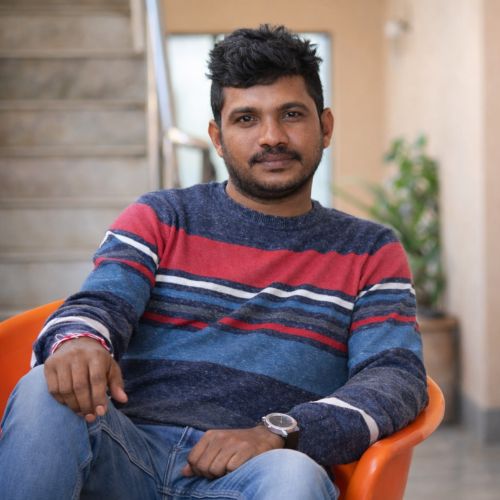
Koti Deva
Digital Marketing Specialist
Koti is a Digital Marketing Specialist with over 10 years of experience and the co-founder of MCQ Orbit — a free exam prep platform built for Indian competitive exam aspirants.
With strong personal knowledge in Quantitative Aptitude, Logical Reasoning, and Mathematics, Koti has a deep understanding of what it takes to crack exams like SSC CGL, IBPS PO, SBI Clerk, UPSC Prelims, NEET, and JEE. Having followed these exams closely for years, he understands the exact topics, patterns, and shortcuts that matter most.
MCQ Orbit was born from a simple desire — to build a platform where every aspirant in India can practice quality MCQs, read reliable current affairs, and prepare confidently, without paying a rupee. Koti combines his digital expertise with his passion for competitive exams to create content that is accurate, practical, and genuinely useful for students.
His mission is straightforward: if the right guidance had been freely available earlier, more students would have cracked their dream exams. MCQ Orbit is his way of making that happen.
Comments
No comments yet.