May 26, 2026 was a day that moved fast across multiple fronts. The most significant defence story of the year broke — India has finalised a proposal to procure 114 Rafale fighter jets from France in a deal worth approximately ₹3.25 lakh crore. Petrol and diesel prices were hiked for the fourth time in two weeks — this time by ₹2.6 and ₹2.7 per litre respectively, adding up to roughly ₹7.6 per litre in cumulative fuel inflation in a fortnight. PM Modi held bilateral meetings with Japanese and Australian Foreign Ministers on the sidelines of the Quad gathering. The Supreme Court sought a detailed response from NTA and the Centre on the NEET paper leak. VB-G RAM G draft rules were officially released — operationalising the July 1 replacement of MGNREGA. The ITBP's first all-women team successfully summited Mount Everest. India's BRICS 2026 Presidency action pillars were formally articulated. A new rural micro-enterprises scheme covering 10,000 units across India was launched. And the rupee crossed ₹96 per dollar — a new low that reflects how much external pressure the economy is under right now. Let's cover every story in full.
International Affairs
114 Rafale Jets — India Finalises ₹3.25 Lakh Crore Mega Deal with France
If there is one story from May 26 that will be referenced in defence and current affairs questions for years, it is this one.
The central government reportedly finalised a proposal worth about ₹3.25 lakh crore to procure 114 Rafale fighter jets from France.
This would be one of the largest single defence procurement deals in world history — and for India, it would be transformative. Let's understand what is being proposed and why it matters so much.
The 114 Rafales are intended for the Indian Air Force (IAF) — which has been operating at well below its sanctioned strength of 42 squadrons for years. As of mid-2026, the IAF has approximately 30-31 operational fighter squadrons — a gap that has been a persistent concern given India's two-front security environment (China on the northern border, Pakistan on the west). The 114 additional Rafales would be added to the 36 Rafales already in IAF service (from the 2016 deal), bringing the fleet to 150 aircraft.
The manufacturing dimension is what makes this deal fundamentally different from the 2016 purchase. The 36 jets from the first deal were bought off the shelf — manufactured in France and delivered to India. The 114-jet deal, by contrast, involves a significant Make in India component. Approximately 108 of the 114 jets are expected to be manufactured in India — with Dassault Aviation partnering with an Indian industrial house (likely Tata Advanced Systems Limited or Hindustan Aeronautics Limited) for local production. This would establish India as a country capable of assembling advanced fourth-generation-plus combat aircraft domestically — a qualitative leap for India's aerospace manufacturing industry.
The Rafale in India's service — what it does: The Rafale is a twin-engine, omnirole combat aircraft — it can perform air superiority, ground attack, close air support, nuclear deterrence, reconnaissance, and anti-ship missions in the same airframe. In IAF service, it is already deployed in the high-altitude Ladakh sector — where it has been a critical deterrent element in the post-Galwan standoff with China. The HAMMER bombs and SCALP cruise missiles it carries give India genuine deep-strike capability that was tested in Operation Sindoor (May 2025).
Strategic timing: This deal comes in the context of China's reported export of the J-35AE stealth fighter to Pakistan (covered May 8 current affairs). If Pakistan acquires fifth-generation stealth aircraft, India's fourth-generation Rafale fleet needs to be large enough to maintain numerical and technological advantage — 150 Rafales against a mix of JF-17s, F-16s, and potentially J-35AEs changes the calculus meaningfully compared to 36 Rafales against that same threat.
PM Modi Meets Japanese and Australian Foreign Ministers — Quad Follow-Through
Prime Minister Narendra Modi held separate meetings with Australian Foreign Minister Penny Wong and Japanese Foreign Minister Toshimitsu Motegi in New Delhi on 26 May 2026.
These bilateral meetings — happening the day after the formal Quad FM gathering concluded — represent the follow-through phase of Quad diplomacy. Multilateral meetings produce joint statements; bilateral meetings are where specific deliverables get locked in.
With Japan's FM Motegi, the discussions centred on the India-Japan Special Strategic and Global Partnership — one of India's most comprehensive bilateral relationships. Key focus areas included progress on the Mumbai-Ahmedabad High Speed Rail (where JICA financing is central), semiconductor cooperation (Japan's semiconductor ecosystem — through companies like Renesas, Tokyo Electron, and Shin-Etsu Chemical — is critical for India's chip ambitions), and the Act East Policy framework including Northeast India connectivity projects funded through Japanese ODA.
With Australia's FM Penny Wong, the conversation built on the recently concluded Quad CET framework. Australia is India's partner in several critical mineral supply chain initiatives — Australia holds the world's largest known lithium reserves and significant cobalt, nickel, and rare earth deposits. The India-Australia ECTA (Economic Cooperation and Trade Agreement), in force since December 2022, provided the trade backdrop for discussions on expanding bilateral investment flows.
Both meetings also covered the West Asian situation — with all three nations having watched the Strait of Hormuz developments very closely given their shared dependence on Gulf energy.
India's BRICS 2026 Presidency — Four Action Pillars Formally Articulated
Guided by the central theme "Building for Resilience, Innovation, Cooperation and Sustainability," India's 2026 BRICS Presidency anchors its action plan across four interconnected pillars. Resilience: Building macroeconomic and supply chain buffers to shield developing states from unilateral sanctions, global freight corridors instability, and energy shocks. Innovation: Exporting India's proven Digital Public Infrastructure frameworks, fintech payment architectures, and open-source tech assets across the Global South. Cooperation: Advocating for comprehensive reforms in legacy international institutions, specifically pushing for a more representative UN Security Council and balanced multilateral trade platforms. Sustainability: Accelerating joint green finance initiatives, backing alternative energy storage networks, and implementing carbon reduction plans balanced with national socio-economic priorities.
These four pillars give the clearest articulation yet of what India intends to achieve during its BRICS Chairship culminating at the 18th BRICS Leaders' Summit in September 2026. Each pillar reflects a genuine Indian strategic priority dressed in language that resonates across the diverse BRICS membership.
Resilience speaks to the lived experience of every BRICS nation during the West Asian crisis — the vulnerability of energy supply chains and the exposure to unilateral sanctions. India's call for supply chain buffers resonates equally with China (which faces US tech export controls), Russia (which faces comprehensive Western sanctions), and the newer Gulf members facing geopolitical uncertainty.
Innovation is where India has the most to offer that other BRICS nations want. India's UPI, Aadhaar, and Digital Public Infrastructure architecture has been watched with enormous interest by African and Latin American nations looking to leapfrog traditional banking infrastructure. India exporting this model — through BRICS technical cooperation — could define India's soft power contribution to the Global South for a generation.
Cooperation is code for UNSC reform. India has been pushing for a permanent Security Council seat for decades. With the current global order visibly fracturing — demonstrated by the Strait of Hormuz crisis, the Russia-Ukraine conflict, and the Gaza situation all simultaneously straining the UN system — the case for reforming the UNSC has never been more evident.
Sustainability gives India space to continue advocating for climate equity — acknowledging climate commitments while insisting on development space for emerging economies. This is consistent with India's CBDR-RC position on all environmental negotiations.
Governance & Policy
VB-G RAM G Draft Rules Released — MGNREGA's July 1 Replacement Takes Shape
The Union Government released draft rules for the Viksit Bharat – Guarantee for Rozgar and Ajeevika Mission (VB-G RAM G) Act, 2025, which will replace the Mahatma Gandhi National Rural Employment Guarantee Act framework from July 1, 2026, fundamentally restructuring India's rural employment architecture. The Centre officially notified that the Mahatma Gandhi National Rural Employment Guarantee Act and associated schemes, guidelines, and rules stand repealed.
The release of draft rules is a critical step — it moves VB-G RAM G from a legislative framework to an implementable operational programme. With just five weeks before the July 1 transition date, the urgency is real.
We covered VB-G RAM G in depth in the May 12 current affairs when the notification was first issued. The draft rules released on May 26 add important operational detail. Among the most significant provisions:
The e-KYC bridge: With 11.58 crore workers (45.4% of the enrolled base) yet to complete e-KYC as of May 7, the draft rules create a 60-day grace period after July 1 during which existing MGNREGA job cards remain valid — preventing immediate exclusion of workers who haven't yet completed biometric verification. This addresses one of the most serious concerns advocates had raised about a hard cutover date.
The Viksit Gram Panchayat Plans (VGPPs): The draft rules specify that each Gram Panchayat must prepare a VGPP within 90 days of the Act coming into force — detailing the public works to be taken up in the next two years. This is the planning mechanism that determines whether VB-G RAM G's project-based approach actually generates work or leaves rural workers without employment options.
The 60-day blackout: States may formally declare a blackout period of up to 60 consecutive days during peak agricultural seasons — during which work demand under the scheme may be suspended in specific districts. Critics have argued this could be used to suppress rural wage bargaining during harvest when landowner demand for labour is highest. Supporters argue it prevents the scheme from competing with agricultural employment that is already available.
Supreme Court Seeks Response from NTA and Centre — NEET Paper Leak
The Supreme Court sought a detailed response from the Centre and the National Testing Agency on allegations of a NEET paper leak, keeping the focus on examination reforms, transparency, and education governance in India.
The Supreme Court's decision to formally seek a government response elevates the NEET 2026 leak from an administrative controversy to a constitutional matter. By issuing notice to both NTA and the Centre — rather than just NTA — the Court is signalling that the institutional accountability question goes beyond the examining body to the ministry that oversees it.
This follows the CBI's finding (covered May 22) that the leak did not originate in NTA's core digital system — suggesting peripheral compromise at the printing or distribution stage. The SC's notice will now require the government to explain: what exactly failed, who is responsible, what immediate corrective steps have been taken, what the re-test plan looks like for 22.79 lakh affected students, and what structural reforms are being proposed to prevent recurrence.
The notice also creates a legal record — any response the government files with the Supreme Court becomes a statement of official position that can be tested in further proceedings. This is the Court doing what it does best in high-visibility governance failures: creating accountability through the judicial process when administrative accountability has not been forthcoming.
Rupee Crosses ₹96 Per Dollar — New Historic Low
The Indian rupee reportedly crossed nearly ₹96 per US dollar in May 2026, compared to around ₹85 a year earlier, reflecting intensified external-sector pressures arising from rising crude oil prices and geopolitical tensions.
A year ago the rupee was at ₹85 to the dollar. Today it crossed ₹96. That is a depreciation of approximately 12.9% in twelve months — significant by any measure for a currency that India's monetary authorities have managed carefully for years.
The depreciation is not mysterious — every component of India's external sector has moved against it simultaneously. Crude oil import costs are elevated due to the Strait of Hormuz blockade. Gold imports hit $90+ billion in FY26. The US ending the Russia oil waiver (covered May 25) has added currency pressure as payment routing through dollar channels becomes more complicated. Foreign Institutional Investors have been pulling capital out of emerging markets into the safety of dollar assets. And India's trade deficit for FY26 — $333.2 billion — means chronic structural dollar outflow exceeds inflow.
What a weaker rupee means for ordinary people: Every item India imports — crude oil, edible oils, fertilisers, electronics, gold — becomes more expensive in rupee terms when the currency weakens. This is part of why three fuel price hikes in two weeks have been possible even with some global crude price moderation — the rupee's fall magnifies the import cost in domestic currency terms. Import-driven inflation is the most direct consequence of the rupee's slide.
RBI's dilemma: The RBI is caught between two uncomfortable options. It can sell more dollars from its reserves to defend the rupee — but at $640 billion, the reserves have already fallen $88.5 billion from their February peak and unlimited intervention is not sustainable. Or it can raise interest rates to attract foreign capital — but higher rates would slow economic growth at a time when India's manufacturing recovery is still consolidating. There is no clean answer here.
Environment & Health
Delhi's Air — Road Dust Now the Primary PM10 and PM2.5 Source
A key concern is Delhi's worsening air pollution due to road dust, now identified as a major PM10 and PM2.5 source.
For years, Delhi's pollution conversation has focused primarily on crop stubble burning (October-November), vehicular exhaust, and industrial emissions. The May 26 analysis turns attention to something more persistent and less seasonal — road dust.
Road dust in Delhi is generated from unpaved roads, construction sites, and the accumulated dust on paved roads that gets lifted back into the air by vehicle movement. Studies now show that during summer months — when stubble burning is absent and rainfall hasn't yet washed streets clean — road dust becomes the primary contributor to PM10 (coarse particulate matter) and a significant contributor to PM2.5 (fine particulate matter) in Delhi's air.
The significance of this finding is practical. Unlike stubble burning (which requires agricultural policy change) or vehicular emissions (which require fleet electrification over time), road dust can be addressed through more immediate mechanical interventions — water sprinkling on roads, vacuum sweeping of major corridors, paving of unpaved roads, and better construction site management. These are municipal functions within Delhi's administrative control — making this a governance accountability story as much as an environmental one.
PM2.5 vs PM10 — why the distinction matters: PM10 particles (below 10 micrometres) enter the respiratory tract. PM2.5 particles (below 2.5 micrometres) are small enough to enter the bloodstream through the lungs and are associated with cardiovascular disease, stroke, and lung cancer at chronic exposure levels. India's National Ambient Air Quality Standards set 24-hour average PM2.5 limit at 60 μg/m³ — Delhi regularly exceeds this by multiples, though summer months are generally better than winter.
Ensitrelvir — New Antiviral in Global Health Discussions
Ensitrelvir was highlighted in health-related current affairs for May 26.
Ensitrelvir (brand name Xocova) is a Japanese oral antiviral drug developed by Shionogi & Co. — initially developed for COVID-19 treatment. It works as a 3CL protease inhibitor — blocking the enzyme that SARS-CoV-2 (and related coronaviruses) use to replicate. It has been approved in Japan since late 2022 under emergency use and has been generating interest globally as a potential treatment for a broader range of respiratory viral infections.
In the May 26 global health context, Ensitrelvir has come up in two ways: first as a reference point in the ongoing Ebola PHEIC response discussions (where the world is reminded of how important antiviral drug development is for emerging infectious diseases), and second as part of broader post-COVID pandemic preparedness discussions about building a global antiviral arsenal that can respond quickly to novel viral threats.
Economy & Finance
Fourth Fuel Price Hike — Petrol Up ₹2.6, Diesel Up ₹2.7 Per Litre
Petrol and diesel prices were increased again across major cities, with petrol up by around ₹2.6 and diesel by about ₹2.7 per litre, marking the fourth hike in less than two weeks.
The cumulative fuel hike picture for May 2026:
Four hikes in less than two weeks. When you add them together, petrol has risen by approximately ₹7.6 per litre in the span of a fortnight — one of the fastest retail fuel price adjustments India has seen outside of the COVID period. This is catching-up behaviour by OMCs (Oil Marketing Companies) — they had been absorbing mounting losses as global crude prices rose due to the Strait of Hormuz blockade, and now they are releasing the accumulated adjustment in a compressed timeframe.
The ₹2.6-2.7 hike on May 26 is the largest single increment of the four — suggesting the OMCs front-loaded smaller hikes and are now delivering the larger correction as the rupee's crossing of ₹96 to the dollar made further delay untenable.
For a family with one car filling up 40 litres monthly and one two-wheeler filling 5 litres weekly, these hikes add approximately ₹500-600 to the monthly household budget — not catastrophic in isolation but significant when stacked on top of the broader cost of living pressures from food inflation, rising LPG costs, and higher CNG prices.
Defence & Security
ITBP's First All-Women Team Summits Mount Everest — Historic Achievement
The Indo-Tibetan Border Police created history as its first all-women team successfully scaled Mount Everest.
This is the kind of story that deserves more space than a brief mention. The Indo-Tibetan Border Police (ITBP) — a Central Armed Police Force under the Ministry of Home Affairs that guards India's borders with China across the entire Himalayan arc from Ladakh to Arunachal Pradesh — has a long tradition of mountaineering excellence. ITBP personnel regularly climb high-altitude peaks as part of their operational training and national representation.
But an all-women team summiting Everest is a historic first for the organisation. Mount Everest at 8,848.86 metres (remeasured in 2020) is the world's highest peak. A summit climb requires months of preparation, extraordinary physical endurance, technical rope-climbing and crevasse-navigation skills, and the mental fortitude to function at altitudes where oxygen levels are roughly a third of sea level. That an all-women ITBP team achieved this is a statement not just about individual achievement but about the organisational culture within the ITBP — one of India's most demanding uniformed services — that trained and supported them.
ITBP — key facts: The ITBP was raised in October 1962 — immediately following the China-India War — specifically to guard the Himalayan frontiers. It operates across altitudes ranging from 9,000 to 18,700 feet in permanent deployment. ITBP personnel are trained for high-altitude warfare, mountaineering, skiing, and disaster relief in snow-bound terrain. The Force has been deployed in UN peacekeeping missions across the world and provided security for India's diplomatic missions in conflict zones including Afghanistan.
SC Clarifies Sedition Proceedings — Kamran v. State of MP
The Supreme Court of India clarified in Kamran v. State of Madhya Pradesh 2026 that proceedings under Section 124A IPC (Sedition) may continue if the accused voluntarily consents, partially modifying the protective freeze imposed in S.G. Vombatkere v. Union of India 2022.
This judgment is layered and needs careful unpacking. In 2022, in S.G. Vombatkere v. Union of India, the Supreme Court had effectively frozen all pending sedition trials across India — directing that no further proceedings be conducted under Section 124A IPC (sedition) while the constitutional validity of the provision was under review. This was a sweeping protective measure intended to prevent the provision from being used during the period of judicial examination.
The 2026 Kamran judgment introduces a nuanced modification. The Court has now said that if an accused person voluntarily consents to the continuation of their trial — because they want the proceedings to conclude (perhaps to get an acquittal on record, or to access bail that requires trial progress) — the court can allow those proceedings to continue despite the general freeze. The accused's own choice overrides the protective freeze in their case.
This is constitutionally interesting because it treats the Article 21 protection as something the rights-holder can waive in their own interest — which is a defensible position in Indian constitutional jurisprudence, though it creates practical complications about what "voluntary" means in a coercive detention environment.
The broader context here is that Section 124A IPC (sedition) was not included in the Bharatiya Nyaya Sanhita (BNS) 2023 — the replacement for the IPC. Instead, the BNS contains Section 152, which criminalises acts endangering India's sovereignty, unity, and integrity. The legal community continues to debate whether this is meaningfully different from sedition or merely a renamed version of the same offence.
Sports
Gurindervir Singh Sets New National 100m Record — 10.09 Seconds
Indian sprinter Gurindervir Singh set a new national 100m record with a timing of 10.09 seconds at an event in Ranchi.
This is a genuinely significant athletics milestone. Breaking the 10.10 barrier in the 100 metres — which had stood as India's national record — and now clocking 10.09 seconds puts Gurindervir Singh in striking distance of the 10.00 second mark that is widely considered the threshold between world-class and elite status in sprinting.
For context: the world record is 9.58 seconds (Usain Bolt, 2009). The Olympic qualifying standard for the 100m men's event is typically 10.00 seconds. India has historically been weak in sprinting — a sport dominated by West African and Caribbean athletes — making a 10.09 clocking by an Indian athlete a meaningful national breakthrough.
The achievement at Ranchi — Jharkhand's capital — also signals the growing strength of athletic infrastructure in tier-2 Indian cities outside the traditional sports development centres of Delhi, Bangalore, and Patiala.
French Open 2026 — Djokovic Survives, Top Seeds Exit
At the French Open 2026, Novak Djokovic survived an early scare while seeded players like Taylor Fritz and Emma Raducanu exited.
The French Open — formally the Roland Garros tournament — is the second Grand Slam of the year and the only one played on clay courts. It is held annually in Paris at the Stade Roland Garros in late May to early June.
Novak Djokovic — the Serbian tennis legend and holder of the most Grand Slam singles titles in men's history (24 as of 2024) — surviving an early scare at age 38-39 (born May 22, 1987) reflects both his extraordinary longevity and the unpredictability of clay-court tennis. Taylor Fritz (USA) and Emma Raducanu (UK) — both highly ranked seeds — exiting early adds to what appears to be an open tournament in 2026.
Erling Haaland Wins Premier League Golden Boot — Third Time in Four Seasons
Erling Haaland won the Premier League Golden Boot for the third time in four seasons.
Erling Haaland — the Norwegian striker playing for Manchester City — won his third Premier League Golden Boot in four seasons. The Golden Boot is awarded to the season's top scorer in the league. Haaland's consistency in achieving this across multiple seasons places him among the most prolific scorers in Premier League history and confirms his status as the dominant centre-forward in world football.
Education & Economy
Rural Micro-Enterprises Scheme — 10,000 Units to Be Modernised by 2029
A targeted, transformational three-year framework is designed to modernise 10,000 rural micro and artisanal units across India between 2026 and 2029. It uses cluster-based interventions — avoiding fragmented individual funding by identifying and upgrading entire regional artisan and manufacturing clusters such as handloom or pottery hubs simultaneously. It provides entrepreneurship incubation, digital literacy camps, and basic financial management coaching directly to rural micro-entrepreneurs. It helps traditional artisans re-engineer their products to match contemporary global market tastes and links them directly to e-commerce pipelines.
This scheme directly addresses the structural weakness in India's rural economy that the QBUSE data (covered May 22) highlighted — while the unincorporated sector is growing in numbers, the quality and productivity of individual enterprises remains low. A handloom weaver or a pottery artisan with a mobile phone and a Flipkart seller account is technically an establishment in the QBUSE data — but without design training, quality standardisation, and supply chain integration, their earnings remain marginal.
The cluster-based approach is the right methodology here. Trying to upgrade 10,000 individual enterprises one at a time is administratively impossible. Identifying that a particular district in UP has 500 brass ware artisans, or a block in Odisha has 300 handloom weavers, and then upgrading the entire cluster simultaneously — with shared design centres, common quality testing facilities, and collective branding — is how heritage crafts can become viable contemporary businesses rather than disappearing industries.
The e-commerce pipeline linkage is particularly important. Schemes like TRIFED's Tribes India, GEM (Government e-Marketplace), and SARAS (covered in earlier current affairs) have shown that rural artisanal products can find premium urban and global markets — if the digital marketing, packaging, and logistics pieces are put in place.
FAQs — 26 May 2026 Current Affairs
Q. What is the significance of India's 114 Rafale jet deal?
India finalised a ₹3.25 lakh crore proposal to procure 114 Rafale jets from France — one of the world's largest ever defence procurement deals. Unlike the 2016 deal (36 jets, off the shelf from France), approximately 108 of the 114 jets will be manufactured in India under a Make in India arrangement. The deal addresses the IAF's critical shortage against its 42-squadron target, provides deterrence against Pakistan potentially acquiring Chinese J-35AE stealth fighters, and establishes India as a country capable of assembling advanced combat aircraft domestically.
Q. What did the VB-G RAM G draft rules specify?
The draft rules released on May 26 operationalise the July 1 MGNREGA replacement. Key provisions include a 60-day grace period for MGNREGA job card holders who haven't completed e-KYC (addressing the 45.4% incomplete biometric verification problem), a 90-day deadline for Gram Panchayats to prepare Viksit Gram Panchayat Plans, and specification of the 60-day agricultural season blackout provision. The rules were released with five weeks to go before the July 1 transition date.
Q. Why has the rupee crossed ₹96 per dollar and what does it mean?
The rupee crossed ₹96 per dollar in May 2026 — down from ₹85 a year earlier, a 12.9% depreciation. The causes are structural: elevated crude oil imports due to the Strait of Hormuz blockade, record gold imports ($90+ billion), the US terminating the Russia oil waiver creating payment complications, FII outflows from emerging markets, and a $333.2 billion trade deficit. A weaker rupee makes all imports more expensive in rupee terms — amplifying fuel, food, and fertiliser price pressures on ordinary households.
Q. What is the Kamran v. State of MP sedition judgment about?
The SC clarified that proceedings under Section 124A IPC (sedition) — which were frozen under the 2022 S.G. Vombatkere judgment — can continue if the accused voluntarily consents. This allows accused persons who want their trials to progress (for acquittal or bail purposes) to waive the protective freeze in their own case. The broader context is the transition from IPC Section 124A to BNS Section 152 — which some argue is sedition renamed.
Q. What did the ITBP's all-women Everest team achieve?
The Indo-Tibetan Border Police's first-ever all-women mountaineering team successfully summited Mount Everest (8,848.86 metres) — a historic first for the organisation. ITBP was raised in October 1962 to guard India's Himalayan frontiers with China, and its personnel are trained for high-altitude operations. The achievement reflects both individual excellence and institutional support within a demanding uniformed service.
Q. What is Gurindervir Singh's significance in Indian athletics?
Indian sprinter Gurindervir Singh set a new national 100m record of 10.09 seconds at Ranchi — breaking the previous national record and putting India within reach of the 10.00 second Olympic qualifying standard. This is significant for a country historically weak in sprinting, a discipline dominated by West African and Caribbean athletes.
Written by
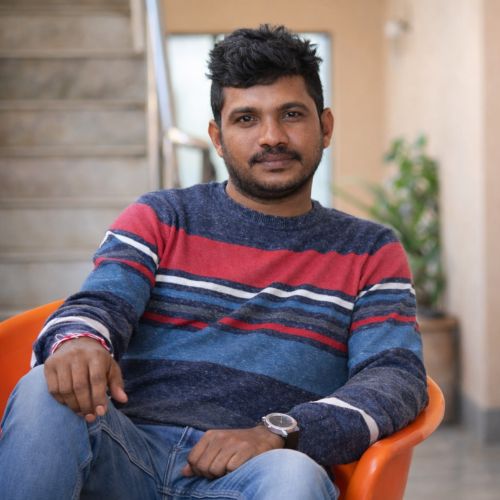
Koti Deva
Digital Marketing Specialist
Koti is a Digital Marketing Specialist with over 10 years of experience and the co-founder of MCQ Orbit — a free exam prep platform built for Indian competitive exam aspirants.
With strong personal knowledge in Quantitative Aptitude, Logical Reasoning, and Mathematics, Koti has a deep understanding of what it takes to crack exams like SSC CGL, IBPS PO, SBI Clerk, UPSC Prelims, NEET, and JEE. Having followed these exams closely for years, he understands the exact topics, patterns, and shortcuts that matter most.
MCQ Orbit was born from a simple desire — to build a platform where every aspirant in India can practice quality MCQs, read reliable current affairs, and prepare confidently, without paying a rupee. Koti combines his digital expertise with his passion for competitive exams to create content that is accurate, practical, and genuinely useful for students.
His mission is straightforward: if the right guidance had been freely available earlier, more students would have cracked their dream exams. MCQ Orbit is his way of making that happen.
Comments
No comments yet.