Current Affairs 4 July 2026 | 4th July 2026 Current Affairs | Daily GK Updates
July 4, 2026 was one of those days where the news simply refused to slow down. PM Modi was in Rajasthan and Gujarat inaugurating projects worth over ₹1 lakh crore. India's new Army Chief unveiled his vision for the force. The Indian Navy foiled a piracy attempt in the Gulf of Aden using MARCOS commandos. India's first semiconductor OSAT facility went live in Gujarat. VB-G RAM G — the replacement for MGNREGA — formally took effect from July 1. And the US celebrated its 250th Independence Day. There's a lot to cover, so let's get into it properly.
Governance & Policy
VB-G RAM G Formally Replaces MGNREGA — What Changes from July 1, 2026
If you've been following current affairs since May, you already know this was coming. VB-G RAM G (Viksit Bharat – Guarantee for Rozgar and Ajeevika Mission, Gramin) officially replaced MGNREGA from July 1, 2026, after the Viksit Bharat-G RAM G Act, 2025 was passed in Parliament in December 2025.
The old system gave rural households 100 days of guaranteed employment. The new one bumps that up to 125 days, which sounds like an improvement — and in raw numbers it is. But the bigger structural change is in how it's funded and delivered. Under MGNREGA, the Centre paid 100% of wages. Under VB-G RAM G, it's a 60:40 split between Centre and states — meaning poorer states that depended most heavily on MGNREGA (UP, Bihar, Jharkhand, Odisha) now face a higher fiscal burden.
The other major shift is the move from a demand-driven rights-based system to a project-based mission model. Under MGNREGA, any rural household could walk up to the gram panchayat, demand work, and the government was legally bound to provide it within 15 days or pay an unemployment allowance. Under VB-G RAM G, work is tied to pre-approved projects. If no project is running in your area, the guarantee becomes harder to enforce in practice.
The rollout on July 1 also came with a significant data concern — as of early May, 11.58 crore workers (45.4% of the registered workforce) had not yet completed the mandatory e-KYC. The government confirmed that existing MGNREGA job cards remain valid until new Gramin Rozgar Guarantee Cards are issued, which provides some transitional relief.
EPFO Scheme 2026 Notified — New 25% Minimum Balance Rule
The Employees' Provident Fund Organisation (EPFO) notified the EPFO Scheme 2026 — which introduces, among other things, a 25% minimum balance rule. Under the new framework, EPFO subscribers must maintain at least 25% of their accumulated balance as a minimum floor — meaning partial withdrawals are now capped at 75% of the total corpus at any point.
The rationale is straightforward: the EPFO wants to protect the retirement corpus from being depleted through premature withdrawals, which have been rising. India's social security safety net is thin, and EPFO is supposed to be the retirement anchor for the organised workforce. If people withdraw everything for weddings, medical emergencies, or home purchases, there's nothing left at retirement age.
The scheme also brought in improvements on the administrative side — centralised KYC validation, real-time claim settlement for smaller withdrawals below a threshold, and integration with DigiLocker for document submission.
About EPFO: The Employees' Provident Fund Organisation is under the Ministry of Labour and Employment and is governed by the EPF & MP Act, 1952. It covers establishments with 20 or more employees — though smaller establishments can voluntarily register. The Universal Account Number (UAN) system links all EPF accounts of an employee across employers.
MHA Designates 23 Pakistan-Based Operatives as Terrorists Under UAPA
The Ministry of Home Affairs designated 23 Pakistan-based operatives linked to Jaish-e-Mohammed and Lashkar-e-Taiba as terrorists under the Unlawful Activities (Prevention) Act, 1967 on July 4, 2026.
This is a significant counter-terror move — and the timing is deliberate. Coming over a year after the Pahalgam attack and Operation Sindoor (May 2025), India continues the diplomatic and legal pressure campaign against Pakistan-based terror networks. Designating individuals under UAPA triggers asset freezes, travel bans, and prevents them from raising funds through Indian financial channels.
About UAPA: The Unlawful Activities (Prevention) Act, 1967 is India's primary anti-terrorism legislation. It was significantly amended in 2019 to allow designation of individuals (not just organisations) as terrorists — earlier, only organisations could be banned. The 2019 amendment was challenged in the Supreme Court; the SC upheld the individual designation power in the Sajal Awasthi case.
Jaish-e-Mohammed was designated as a global terrorist organisation by the UN Security Council under Resolution 1267 in 2001. Lashkar-e-Taiba was similarly designated. India has consistently pushed for additional designations at the UNSC — often blocked by China using its veto as Pakistan's all-weather ally.
Modified UDAN Scheme Approved — ₹28,840 Crore for Regional Air Connectivity
The Union Cabinet approved the Modified UDAN (Ude Desh Ka Aam Nagarik) scheme for a 10-year period from FY 2026-27 to FY 2035-36, with a total financial outlay of ₹28,840 crore.
UDAN was originally launched in April 2016 to make flying affordable for ordinary Indians — specifically by connecting underserved regional airports through viability gap funding (VGF) to airlines. The scheme has added dozens of previously unconnected cities to India's aviation map.
The modified version goes further — it expands VGF support, covers helicopter routes for Himalayan and island connectivity, integrates seaplane routes, and extends the scheme horizon to 2035-36. The 10-year commitment gives airlines the planning certainty they need to invest in regional fleet expansion.
India's aviation sector is growing fast — domestic air passenger traffic crossed 20 crore in FY26 — but the growth is highly concentrated in metro airports. UDAN's purpose is geographic democratisation of air travel. The ₹28,840 crore is specifically a viability gap funding pool — it fills the revenue gap between what a regional route actually earns and what an airline needs to break even.
Nasha Mukt Bharat Saptah Concludes at Haridwar
Nasha Mukt Bharat Saptah — a week-long drug awareness campaign — concluded at Haridwar with large-scale community participation. The campaign is part of the Nasha Mukt Bharat Abhiyan (NMBA) — India's flagship anti-drug campaign under the Ministry of Social Justice and Empowerment.
NMBA was launched in August 2020 initially targeting 272 most affected districts and has since expanded. The Haridwar conclusion reflects the campaign's outreach into pilgrimage-city demographics — a strategic choice, since pilgrimage towns attract migrants, tourists, and youth from across India and have seen growing substance abuse challenges.
Constitutional basis: Article 47 of the Constitution — a Directive Principle of State Policy — specifically directs the State to endeavour to bring about the prohibition of intoxicating drinks and drugs that are injurious to health.
Defence & Security
General Dhiraj Seth Becomes 31st Chief of Army Staff — Unveils VIJAY Roadmap
General Dhiraj Seth took over as the 31st Chief of the Army Staff (COAS) on June 30, 2026, succeeding General Upendra Dwivedi. On July 1, after receiving his guard of honour at South Block, he unveiled his roadmap for the Indian Army through the acronym VIJAY.
What does VIJAY stand for? It breaks down as: Vigilance, Innovation and Transformation, Jointness and Integration, Atmanirbharta, and Yodha First — all aligned with the Ministry of Defence's broader Decade of Transformation (2023–2032) framework.
The Yodha First element is worth noting — it's a deliberate signal that soldier welfare, training quality, and on-ground capability will not be sacrificed for headquarters-driven bureaucratic transformation. It's the new COAS's way of saying modernisation must be felt by the soldier at the forward post, not just celebrated in PowerPoint presentations at South Block.
General Seth's background: He is an alumnus of the National Defence Academy, Khadakwasla — India's premier tri-services training institution — and was commissioned into the 2nd Lancers (Armoured Corps) in December 1986. He is the 7th COAS from the Armoured Corps.
Indian Navy Foils Piracy Attempt — INS Trikand, MARCOS, and P-8I in Action
This is a genuinely impressive operational story — and it tells you something important about how India's maritime security architecture has matured.
On July 1, 2026, INS Trikand foiled a piracy attempt on MV Golden Arsenal — a St Vincent and the Grenadines-flagged bulk carrier with 21 crew members (including one Indian national) carrying cargo in the Gulf of Aden. The response involved INS Trikand (a stealth frigate), MARCOS commandos (Marine Commandos — Indian Navy's special forces), and P-8I Poseidon maritime patrol aircraft for aerial surveillance — all coordinated through the Information Fusion Centre – Indian Ocean Region (IFC-IOR).
The IFC-IOR — based at INS Kattabomman, Gurugram — is India's maritime domain awareness hub, coordinating information sharing among partner nations to counter piracy, trafficking, and other threats in the Indian Ocean. The fact that the response involved three asset types working together points to a genuinely integrated, multi-domain maritime security operation.
This follows INS Trikand having also deterred a separate piracy attempt on MV Fareeda 5 in mid-June 2026. The Gulf of Aden piracy resurgence is linked directly to the instability in Yemen and Somalia — a security spillover from the broader West Asian conflict situation.
About P-8I Poseidon: India operates 12 P-8I aircraft from the US under a government-to-government deal — they are the maritime patrol and anti-submarine warfare backbone of India's naval aviation. Each P-8I can track multiple surface and submarine targets simultaneously while coordinating with surface ships.
DAC Clears ₹52,000 Crore Defence Proposals — Biggest Single-Day Procurement Approval in Years
The Defence Acquisition Council (DAC) — chaired by Defence Minister Rajnath Singh — cleared defence procurement proposals worth approximately ₹52,000 crore on July 4, 2026. This is one of the largest single-day DAC clearances in recent memory.
What was cleared? The list is substantial — AKASH TARANG (extended range variant of India's indigenous surface-to-air missile system for the Air Force), MPATGM (Man-Portable Anti-Tank Guided Missiles for the Army), MRSAM (Medium Range Surface to Air Missiles — Navy variant), V-SHORADS (Very Short Range Air Defence Systems), Active Protection Systems (APS) for tanks, jet-powered kamikaze drones (loitering munitions), MIGM (Mine Influenced Ground Mines), NSUAS (Naval Ship-Borne Unmanned Aerial Systems), LBTF (Light Bullet-Proof Toughened Flooring for military vehicles), and Fixed-Wing HAPS (High Altitude Platform Stations — essentially stratospheric surveillance platforms).
The sheer breadth of this list tells you something about where Indian military thinking is heading — significant investment in drone warfare (kamikaze drones, NSUAS, HAPS), layered air defence (AKASH TARANG, MRSAM, V-SHORADS), and active tank protection. All of this reflects lessons absorbed from observing the Russia-Ukraine war and India's own Operation Sindoor experience.
All proposals were approved under the Buy Indian (IDDM) category — meaning at least 50% indigenous content for systems and 60% for ammunition. This is a direct push for Atmanirbhar Bharat in defence manufacturing.
About DAC: The Defence Acquisition Council is the highest decision-making body for defence procurement in India, established in 2001 following the Kargil Review Committee recommendations. It is chaired by the Defence Minister.
Science, Technology & Space
CG Semi OSAT Facility Inaugurated — India's Semiconductor Moment in Sanand, Gujarat
This is arguably the most strategically significant infrastructure story of July 4, 2026. PM Modi inaugurated the CG Semi Outsourced Semiconductor Assembly and Test (OSAT) facility in Sanand, Gujarat — marking a milestone in India's semiconductor self-reliance journey.
What is an OSAT facility? Semiconductor manufacturing happens in two broad phases — fabrication (fab) where the chip is actually made on silicon wafers, and assembly, packaging, and testing (ATP/OSAT) where the fabricated chip is packaged into the form you'd recognise in a device and tested for quality. OSAT sits in the second phase — it's where chips get their final protective casing and quality verification before going into electronics.
India currently doesn't have the most advanced chip fabrication capacity — building a fab requires tens of billions of dollars and takes years. OSAT is a faster, more achievable entry point into the semiconductor value chain. The CG Semi facility brings genuine value: it creates domestic capability to package and test chips, reducing dependence on facilities in Malaysia, Vietnam, and China.
The India Semiconductor Mission context: This facility is one of 12 projects approved under the India Semiconductor Mission — backed by a ₹76,000 crore incentive scheme. The mission aims to build India's complete semiconductor ecosystem from design through fabrication to packaging by 2030.
Delhi EV Policy 2026 Notified — Zero-Emission Transport Roadmap
The Delhi government officially notified the Delhi Electric Vehicle (EV) Policy 2026, which came into operational effect from July 1, 2026 and runs until March 31, 2030.
Delhi's air quality is one of the most persistent governance failures in India — the city routinely ranks among the world's most polluted capitals. Transport is one of the largest contributors to Delhi's particulate matter pollution, and the EV policy is specifically designed to aggressively eliminate petrol and diesel vehicles from Delhi roads over the next four years.
Key provisions include mandatory EV registration requirements for new vehicle categories (two-wheelers from January 2027, three-wheelers from April 2027, commercial light vehicles from July 2027, and private four-wheelers from January 2028), expanded charging infrastructure requirements (every fuel station must have at least two EV charging points by December 2026), and a scrappage incentive for petrol/diesel vehicles above 10 years old.
The policy is ambitious — but Delhi has faced implementation challenges with previous EV targets. The charging infrastructure piece is particularly critical — without ubiquitous charging, consumer adoption will remain limited regardless of mandates.
Patent Mitra Initiative — ICMR's Platform for Medical Innovation IP
The National Medical Commission (NMC) advised all medical colleges and healthcare institutions to use the ICMR's Medical Innovations Patent Mitra platform — a centralised digital platform that helps researchers, clinicians, and medical students protect and commercialise their innovations.
India produces an enormous amount of biomedical research — across ICMR institutes, IITs, AIIMS, and hundreds of medical colleges. But a surprisingly small proportion of this research ever becomes a patent, let alone a commercial product. The bottleneck is typically the legal and bureaucratic complexity of the patent filing process — which most researchers aren't trained for.
Patent Mitra solves this by providing end-to-end IP support — prior art searches, patent drafting assistance, examination report handling, and commercialisation advice — specifically for biomedical innovations. It is developed and managed by ICMR (Indian Council of Medical Research) and is accessible to all NMC-recognised medical institutions.
About ICMR: The Indian Council of Medical Research is the apex body in India for the formulation, coordination, and promotion of biomedical research. It is under the Department of Health Research, Ministry of Health and Family Welfare.
India's Water Crisis — 40% Monsoon Deficit Warning and Structural Reform Need
A water resource expert analysis highlighted India's deepening water crisis, noting an early-season monsoon rainfall deficit of over 40% across several regions — despite the Southwest Monsoon's early onset over Kerala in late May.
This is the El Niño effect playing out exactly as NOAA's 96% persistence probability forecast suggested. The monsoon arrived early but hasn't been distributing rainfall evenly — the Arabian Sea branch has been weaker than normal, leaving central and northwest India significantly drier than seasonal averages through late June.
The analysis called for moving away from purely infrastructure-led responses — which have dominated India's water policy for decades (dams, canals, tube wells) — toward smart digital water management. This means deploying digital flow meters on irrigation canals (currently most canals in India have zero measurement infrastructure — farmers take what they can, when they can), treating urban wastewater as a resource rather than a liability, and scaling micro-irrigation (drip and sprinkler) to the 70 million+ hectares that still use flood irrigation.
India's Jal Jeevan Mission has made enormous strides in drinking water access — connecting over 14 crore rural households to tap water — but the structural issues around groundwater depletion and irrigation efficiency are separate and equally urgent challenges.
Environment & Biodiversity
709 New Species Discovered in India — Biodiversity Bulletin
The Zoological Survey of India (ZSI) and Botanical Survey of India (BSI) jointly announced the discovery of 709 new species in India during 2025 — revealed in the annual biodiversity bulletin published in July 2026.
This number is extraordinary — but it's important to understand what it means. These aren't all dramatic new large animals (though there are some reptiles and fish in the mix). The majority are insects, plants, fungi, and microorganisms — taxa where our scientific knowledge of India's biodiversity remains very incomplete. India's extraordinary geographic diversity — from Himalayan alpine zones to tropical rainforests to desert ecosystems to marine environments — means new species discoveries continue at a rapid pace.
The discovery of 709 species in a single year also reflects improved survey methodology — environmental DNA (eDNA) sampling, citizen science platforms, and better international collaboration have dramatically accelerated species documentation.
About ZSI and BSI:
Zoological Survey of India (ZSI): Established 1916; under Ministry of Environment, Forest and Climate Change; surveys India's faunal resources
Botanical Survey of India (BSI): Established 1890; same ministry; surveys India's floral resources
Economy, Banking & Infrastructure
CCEA Approves ₹14,114 Crore Highway Projects — Delhi and Uttar Pradesh
The Cabinet Committee on Economic Affairs (CCEA) approved two major National Highway projects worth ₹14,114.81 crore — one in Delhi and one in Uttar Pradesh — as part of India's continuing highway expansion push.
India has been building highways at approximately 10,000 km per year — a pace that would have seemed impossible a decade ago. The CCEA clearances on July 4 add to what has already been an extraordinary infrastructure construction period.
The Delhi project focuses on urban congestion relief — adding elevated corridors and grade separators to some of Delhi's most chronically congested road corridors. The UP project is a connectivity enhancement — linking secondary districts to the Golden Quadrilateral and expressway network, which is critical for agricultural market access and reducing logistics costs in one of India's most populous states.
About CCEA: The Cabinet Committee on Economic Affairs is a cabinet committee chaired by the Prime Minister — it approves large infrastructure projects, economic policy decisions, and major government expenditures. It is one of several Cabinet Committees (others include CCS — Cabinet Committee on Security, and CCPA — Cabinet Committee on Parliamentary Affairs).
BPCL Signs Agreement for Oil Block in Brazil — Overseas Exploration Expands
Bharat Petroleum Corporation Limited (BPCL) signed an agreement for an oil exploration block in Brazil — expanding India's overseas oil and gas footprint.
Brazil is one of the world's most significant deepwater oil producers — the pre-salt oil fields off Brazil's coast (discovered in 2006-07 by Petrobras) represent some of the largest offshore oil discoveries of the 21st century. BPCL's entry into a Brazilian block gives India another upstream equity oil stake — meaning India gets crude oil at production cost rather than international market price for its share of output.
India's strategy of acquiring overseas equity oil is a long-standing energy security play. ONGC Videsh (OVL) — ONGC's overseas arm — has been doing this for decades. BPCL's entry signals that India's downstream oil companies are also joining the upstream equity acquisition strategy.
ADB Approves Loan for Karnataka's Urban Development
The Asian Development Bank (ADB) approved a loan for urban infrastructure development in Karnataka — covering water supply, sewerage, and urban mobility projects in several Karnataka cities.
About ADB: The Asian Development Bank is a Manila-headquartered multilateral development bank — established in 1966 — with 68 member countries (including India). Its primary mandate is to reduce poverty and promote sustainable development in Asia-Pacific. India is consistently one of ADB's largest borrowers.
The ADB loan follows standard multi-lateral lending terms — below-market interest rates with longer repayment tenors than commercial borrowing, making it attractive for long-gestation urban infrastructure projects that don't generate immediate commercial returns.
PM Modi Inaugurates ₹1.06 Lakh Crore Projects in Balotra, Rajasthan
PM Modi inaugurated, dedicated, and laid foundation stones for development projects worth approximately ₹1.06 lakh crore in Balotra, Rajasthan — spanning aviation, energy, and connectivity sectors.
The centrepiece was India's first greenfield integrated refinery-cum-petrochemical complex at Pachpadra in Balotra district — a Rajasthan Refinery project that has been in the works for over a decade. The complex is a joint venture between Hindustan Petroleum Corporation Limited (HPCL) and the Government of Rajasthan. Once fully operational, it will process 9 million metric tonnes per annum (MMTPA) of crude oil and produce petroleum products and petrochemicals — significantly boosting Rajasthan's industrial output and reducing India's petrochemical import dependence.
A new Jodhpur Airport terminal was also inaugurated — expanding air connectivity for Rajasthan's heritage tourism hub. New energy transmission infrastructure and road connectivity projects round out the ₹1.06 lakh crore package.
International Affairs
US Celebrates 250th Independence Day — America@250
July 4, 2026 marks the United States' 250th Independence Day — making 2026 a seminal year in American history.
The Declaration of Independence was adopted on July 4, 1776 by the Second Continental Congress in Philadelphia — declaring the thirteen American colonies free from British rule. The document — primarily drafted by Thomas Jefferson — articulated principles that would become foundational to modern democratic governance: that all men are created equal, that they are endowed with certain unalienable rights (life, liberty, and the pursuit of happiness), and that governments derive their just powers from the consent of the governed.
250 years is a significant milestone — the Semiquincentennial (or America@250 as the official celebrations were branded) saw events across the US. For India, the occasion is diplomatically relevant — India-US relations have deepened significantly, and the shared value of democratic governance is a cornerstone of the Comprehensive Global Strategic Partnership between the two countries.
A brief American Revolution primer for international exam readers: The American Revolution (1775-1783) was both a political independence movement and an Enlightenment-era philosophical statement. It was directly influenced by Enlightenment thinkers like John Locke (social contract, natural rights) and drew on British constitutional traditions. The revolution inspired subsequent independence and democratic movements globally — including, eventually, India's own freedom struggle.
Russia's Largest Drone-Missile Attack on Kyiv
Russia launched what was described as its largest combined drone-missile attack on Kyiv in the ongoing Russia-Ukraine conflict — targeting energy infrastructure ahead of Ukraine's summer.
The attack reflects Russia's continuing strategy of targeting Ukraine's power grid and energy infrastructure — aimed at degrading civilian morale and military logistics simultaneously. Ukraine's air defences — bolstered by NATO-supplied Patriot missile systems and F-16 fighters delivered in 2024 — intercepted a significant portion of the incoming missiles and drones, but the scale of the attack overwhelmed some defences.
India's position: India has maintained its long-standing call for dialogue and diplomacy on the Russia-Ukraine conflict — abstaining on most UNGA resolutions condemning Russia while maintaining trade relations with both sides. With India importing significant Russian crude at discounted prices since 2022, the economic dimension of India's Ukraine neutrality remains very much in play.
NATO Summit — Antalya, Türkiye
NATO held its annual Summit in Antalya, Türkiye in early July 2026 — the first NATO Summit hosted by Türkiye in many years, coinciding with COP31 also being hosted in Antalya later in the year.
Key agenda items included NATO defence spending commitments (members debating raising the floor from 2% of GDP to 3%), support for Ukraine, and the alliance's expanding Indo-Pacific engagement (with Australia, Japan, South Korea, and New Zealand as Asia-Pacific partners).
About NATO: The North Atlantic Treaty Organization was established through the North Atlantic Treaty (Washington Treaty), signed April 4, 1949. It currently has 32 members — including Sweden (joined March 2024) and Finland (joined April 2023) as the most recent additions. NATO's collective defence clause (Article 5) — that an attack on one member is an attack on all — is the cornerstone of the alliance.
Iran's Six-Day State Funeral for Ali Khamenei
Iran held a six-day state funeral for Supreme Leader Ali Khamenei, marking the end of an era in Iranian politics that stretched back to 1989 when Khamenei assumed the Supreme Leadership following Ayatollah Khomeini's death.
Khamenei's death marks a profound transition moment for Iran — the succession process under the Assembly of Experts will determine the next Supreme Leader, with significant implications for Iran's nuclear programme, its relationship with the West, the ongoing Gulf conflict, and the Strait of Hormuz situation that has dominated global energy markets throughout 2026.
Iran's political system is a theocratic republic — combining elements of democratic elections (President, Parliament) with religious authority structures (Supreme Leader, Guardian Council, Assembly of Experts). The Supreme Leader is the highest authority — above the elected President — and controls the military, judiciary, and foreign policy.
Canada and Philippines Sign Strategic Partnership
Canada and the Philippines signed a Strategic Partnership — elevating bilateral ties and deepening cooperation on defence, trade, and multilateral issues.
The partnership reflects two broader trends — Canada's growing Indo-Pacific engagement (Canada released its Indo-Pacific Strategy in 2022) and the Philippines' deepening alignment with Western partners amid its ongoing South China Sea disputes with China. The Philippines has been at the epicentre of South China Sea confrontations — particularly around Scarborough Shoal and the Second Thomas Shoal — and has been actively building partnerships with like-minded democracies.
Sports
Vaibhav Sooryavanshi Creates Another Record — IPL 2026 Season Review
The IPL 2026 season concluded with Vaibhav Sooryavanshi having rewritten the record books for Rajasthan Royals. Beyond the 50 sixes in a season record we covered in May current affairs, the full season review confirmed him as one of the most explosive batting talents to emerge from India in years — comparable to how Rishabh Pant burst onto the scene a decade earlier.
India's cricket talent pipeline has been a constant story of renewal — and Sooryavanshi represents the next wave that coaches at the National Cricket Academy (NCA) in Bengaluru have been nurturing through structured age-group cricket.
FAQs — 4 July 2026 Current Affairs
Q. What is VB-G RAM G and how does it differ from MGNREGA?
VB-G RAM G (Viksit Bharat – Guarantee for Rozgar and Ajeevika Mission, Gramin) replaced MGNREGA from July 1, 2026. It extends employment guarantee from 100 to 125 days per household, but shifts to 60:40 Centre-State funding (from 100% Centre funding under MGNREGA) and moves from a demand-driven rights-based model to a project-based mission mode. Employment is now linked to pre-approved projects rather than being available on demand.
Q. What is the CG Semi OSAT facility inaugurated at Sanand?
CG Semi is India's first Outsourced Semiconductor Assembly and Test (OSAT) facility — inaugurated by PM Modi in Sanand, Gujarat. It handles the packaging and testing phase of semiconductor manufacturing (not chip fabrication). It is one of 12 projects under India's Semiconductor Mission, backed by a ₹76,000 crore incentive scheme. OSAT is a faster entry point into the semiconductor value chain than building a full fabrication plant.
Q. What is the DAC and what did it approve on July 4?
The Defence Acquisition Council (DAC) is India's highest defence procurement body, chaired by the Defence Minister. On July 4 it cleared proposals worth approximately ₹52,000 crore — including AKASH TARANG (surface-to-air missiles), MPATGM (anti-tank missiles), V-SHORADS (short-range air defence), jet-powered kamikaze drones, Active Protection Systems for tanks, and High Altitude Platform Stations (HAPS). All were under the Buy Indian IDDM category.
Q. Who is General Dhiraj Seth and what is his VIJAY roadmap?
General Dhiraj Seth became India's 31st Chief of the Army Staff on June 30, 2026. His VIJAY roadmap stands for Vigilance, Innovation and Transformation, Jointness and Integration, Atmanirbharta, and Yodha First — aligned with the Defence Ministry's Decade of Transformation (2023–2032). He is the 7th COAS from the Armoured Corps and an NDA alumnus.
Q. What is the significance of the US 250th Independence Day for exam preparation?
The US declared independence on July 4, 1776 — making 2026 its Semiquincentennial (250th anniversary). The Declaration of Independence was primarily drafted by Thomas Jefferson and was adopted by the Second Continental Congress in Philadelphia. It was influenced by Enlightenment philosophers like John Locke. This is relevant for UPSC World History, GRE/SAT for US students, and UK A-Levels History.
Q. Why is Ali Khamenei's death significant for global affairs?
Ali Khamenei was Iran's Supreme Leader since 1989 — the highest authority in Iran's theocratic republic, above the elected President. His death triggers a succession process through the Assembly of Experts, with major implications for Iran's nuclear programme, the ongoing Gulf conflict, Strait of Hormuz navigation, and global energy markets. Iran's Supreme Leader controls military, judiciary, and foreign policy — making the succession one of the most consequential geopolitical transitions of 2026.
Written by
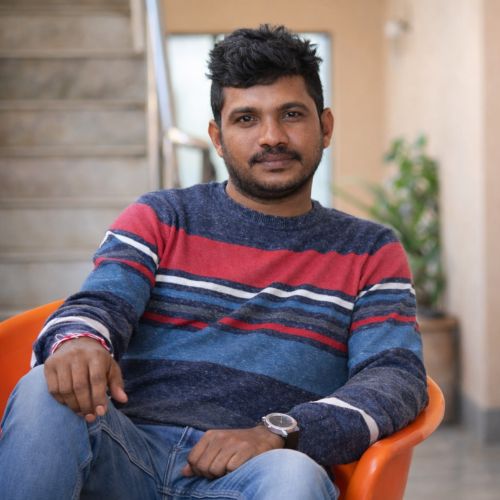
Koti Deva
Digital Marketing Specialist
Koti is a Digital Marketing Specialist with over 10 years of experience and the co-founder of MCQ Orbit — a free exam prep platform built for Indian competitive exam aspirants.
With strong personal knowledge in Quantitative Aptitude, Logical Reasoning, and Mathematics, Koti has a deep understanding of what it takes to crack exams like SSC CGL, IBPS PO, SBI Clerk, UPSC Prelims, NEET, and JEE. Having followed these exams closely for years, he understands the exact topics, patterns, and shortcuts that matter most.
MCQ Orbit was born from a simple desire — to build a platform where every aspirant in India can practice quality MCQs, read reliable current affairs, and prepare confidently, without paying a rupee. Koti combines his digital expertise with his passion for competitive exams to create content that is accurate, practical, and genuinely useful for students.
His mission is straightforward: if the right guidance had been freely available earlier, more students would have cracked their dream exams. MCQ Orbit is his way of making that happen.
Comments
No comments yet.