The 23rd of July 2026 was a day that blended history with fast-moving policy. India remembered one of its tallest freedom fighters on his birth anniversary, radio marked its own special day, Parliament dug into a bill that could reshape the Supreme Court, and the government quietly rewired one of the country's most-watched economic indicators. Here is everything an aspirant needs, sorted the way it usually appears in the General Awareness section.
National Days & Important Observances
Lokmanya Tilak Jayanti — Remembering the "Father of Indian Unrest"
The nation observed Lokmanya Bal Gangadhar Tilak Jayanti on 23 July, the birth anniversary of the leader born on 23 July 1856 in Ratnagiri, Maharashtra. Tilak is the man who turned the freedom movement from polite petitioning into a genuine mass movement, and his slogan — "Swaraj is my birthright, and I shall have it" — is still quoted in classrooms and campaign speeches alike. He founded the New English School, the Deccan Education Society, and Fergusson College, and used two newspapers, the Marathi Kesari and the English Mahratta, to carry nationalist ideas to ordinary readers. He also weaponised culture for politics in the best sense, turning the public Ganesh festival and Shivaji Jayanti into platforms for collective pride, and later co-founded the Indian Home Rule League (1916) alongside Annie Besant. For exams, remember him as a journalist, social reformer, and one of the "Lal-Bal-Pal" trio.
National Broadcasting Day
23 July is also National Broadcasting Day, marking the first-ever radio broadcast in the country by the private Indian Broadcasting Company from its Bombay station on 23 July 1927. That single transmission eventually grew into All India Radio, and the day is a favourite one-liner in banking and SSC papers because it neatly ties a date to an institution.
Polity & Governance
Supreme Court (Number of Judges) Amendment Bill, 2026
On Day 4 of the Monsoon Session of Parliament (20 July–13 August 2026), the Lok Sabha took up debate on the Supreme Court (Number of Judges) Amendment Bill, 2026. The proposal is straightforward but significant: it seeks to raise the sanctioned strength of the Supreme Court from 34 to 38 judges, including the Chief Justice of India. The logic behind the move is the relentless pendency of cases — India's apex court routinely carries tens of thousands of pending matters, and successive Chief Justices have argued that more judges are needed to clear the backlog. For a Polity answer, keep two anchors in mind: the strength of the Supreme Court is fixed by Parliament through law under Article 124, and this is not the first time the number has been revised upward — it has climbed steadily from the original strength of eight (one CJI plus seven judges) in 1950.
Economy & Finance
Index of Core Industries Gets a New Base Year — Iron Ore Joins as the 9th Sector
A major statistical update landed this week: the Index of Core Industries (ICI) was revised to a new base year of 2022-23 (from the older 2011-12), and — importantly for exams — iron ore was added as a fresh member of the basket. That takes the number of core sectors from eight to nine: coal, crude oil, natural gas, refinery products, fertilisers, steel, cement, electricity, and now iron ore. The addition reflects India's rise as one of the world's largest iron ore producers, and iron ore enters with a weight of roughly 4.9%. The ICI is published by the Office of the Economic Adviser, Ministry of Commerce and Industry, and it acts as a high-frequency lead indicator for the broader Index of Industrial Production (IIP), within which these core industries carry around 40% weight. The refreshed series also reported core-sector growth of about 5% for June 2026.
Wholesale Price Inflation Stays Elevated
Economic commentary on 23 July also flagged that Wholesale Price Index (WPI) inflation had climbed to roughly 9.9% in June 2026 — among the sharpest readings in over a decade outside the pandemic period — driven largely by fuel, power, and manufactured-goods prices. The takeaway aspirants should note is conceptual: this is a cost-push (supply-side) inflation story rather than a demand-driven one, which is exactly the kind of situation where the RBI's interest-rate tools have limited traction and coordinated fiscal-plus-structural action matters more.
Science, Technology & Environment
CSIR Technology Transfer Event & Smart Rural Water Monitoring System
The Council of Scientific and Industrial Research (CSIR) held a Technology Transfer Event at its New Delhi headquarters, where it handed over four indigenous technologies to industry and commercially launched an IoT-enabled Smart Rural Water Monitoring System. The event, coordinated by CSIR-CSIO, Chandigarh under Director General Dr. N. Kalaiselvi, also recognised Bharat Electronics Limited (BEL) for royalty generated from a licensed defence technology — a small but telling sign of India's push to turn public-lab research into commercial and strategic value.
Ahimsa Index — India's First Animal-Cruelty-Free Index
Markets got a values-driven newcomer with the Ahimsa Index, described as India's first index built specifically around an animal-cruelty-free screen. It excludes companies engaged in activities such as animal testing, and dairy, meat, and leather businesses, and it complements the earlier BSE Saatvik 100 Index (launched 17 June 2026), which screens against animal harm, addictive products, and other "non-saatvik" activities. This is a neat prelims hook on the growing space of ESG and ethical investing in India.
Prakriti Café at Ayush Bhawan
In a lighter but exam-worthy item, Union AYUSH Minister Prataprao Jadhav inaugurated Prakriti Café at Ayush Bhawan, New Delhi — described as the Ministry of AYUSH's first workplace initiative of its kind, promoting Ayurveda-aligned, wellness-oriented food at the workplace.
FAQs — 23 July 2026 Current Affairs
Q. Why is 23 July significant in Indian history?
It is the birth anniversary of Lokmanya Bal Gangadhar Tilak (born 23 July 1856) and is also observed as National Broadcasting Day, commemorating India's first radio broadcast on 23 July 1927.
Q. What is the Supreme Court (Number of Judges) Amendment Bill, 2026?
It proposes raising the sanctioned strength of the Supreme Court from 34 to 38 judges (including the CJI) to help tackle case pendency. Parliament fixes the court's strength through law under Article 124.
Q. What changed in the Index of Core Industries?
The ICI moved to a 2022-23 base year and added iron ore as the ninth core industry (weight ~4.9%). The core sectors together carry roughly 40% weight in the IIP and are published by the Office of the Economic Adviser.
Q. What is the Ahimsa Index?
India's first stock index built on an animal-cruelty-free screen, excluding sectors such as animal testing, dairy, meat, and leather. It complements the BSE Saatvik 100 Index launched in June 2026.
Written by
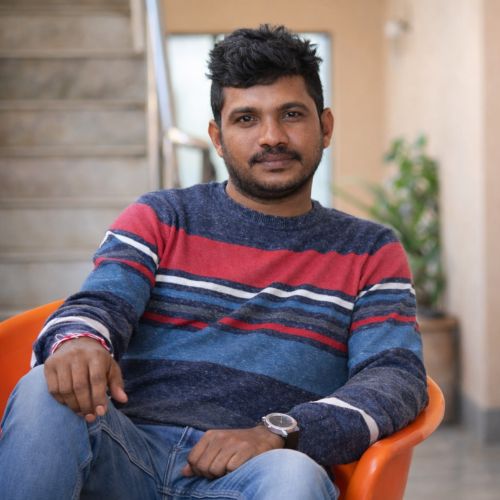
Koti Deva
Digital Marketing Specialist
Koti is a Digital Marketing Specialist with over 10 years of experience and the co-founder of MCQ Orbit — a free exam prep platform built for Indian competitive exam aspirants.
With strong personal knowledge in Quantitative Aptitude, Logical Reasoning, and Mathematics, Koti has a deep understanding of what it takes to crack exams like SSC CGL, IBPS PO, SBI Clerk, UPSC Prelims, NEET, and JEE. Having followed these exams closely for years, he understands the exact topics, patterns, and shortcuts that matter most.
MCQ Orbit was born from a simple desire — to build a platform where every aspirant in India can practice quality MCQs, read reliable current affairs, and prepare confidently, without paying a rupee. Koti combines his digital expertise with his passion for competitive exams to create content that is accurate, practical, and genuinely useful for students.
His mission is straightforward: if the right guidance had been freely available earlier, more students would have cracked their dream exams. MCQ Orbit is his way of making that happen.
Comments
No comments yet.