
Current Affairs 9 June 2026 | 9th June 2026 Current Affairs | Daily GK Updates

If you're sitting for any competitive exam in the coming weeks, June 9 is a day you want to have covered thoroughly. PM Modi inaugurated projects worth ₹21,700 crore in Gujarat and Daman and Diu. India won the SAFF Women's Football Championship. The French Open 2026 concluded with two new Grand Slam champions. India's Hockey U18 team won the Asia Cup gold. Tamil Nadu launched the Singappen Special Task Force. Assam exported GI-tagged Tezpur litchis to Dubai and Singapore for the first time. Indore began hosting the BRICS Agriculture Ministers' Meeting under India's Presidency. SBI projected India's FY27 GDP at 7.7%. And Lieutenant Commander Suraj Prashar received the Shaurya Chakra from President Murmu. A genuinely packed day — let's break it all down.
Governance & Infrastructure
PM Modi Inaugurates ₹21,700 Crore Projects in Gujarat and Daman and Diu
PM Narendra Modi visited Gujarat and the Union Territory of Dadra and Nagar Haveli and Daman and Diu on 5 June 2026, inaugurating and laying foundation stones for development projects worth ₹21,700 crore.
These projects span road infrastructure, port development, water supply, healthcare, and urban development — reflecting the government's continued focus on western India as a manufacturing and logistics hub. Daman and Diu, which merged with Dadra and Nagar Haveli in January 2020 to form a single UT, has been seeing accelerated development investment as part of the broader coastal economy push.
The ₹21,700 crore figure includes both inaugurations (projects that are complete and being dedicated to the nation) and foundation stone laying (projects whose construction is beginning) — a common structure for such PM visits that combines completion celebration with future commitment signalling.
Gujarat's strategic importance in India's economic geography continues to grow — it is home to GIFT City, Dholera SIR, the world's largest single-location refinery at Jamnagar, and the Deendayal Port Authority which is setting up India's first green methanol plant. Projects in this corridor have outsized multiplier effects on national logistics and manufacturing.
Tamil Nadu Launches Singappen Special Task Force Against Wildlife Crime
Tamil Nadu launched the Singappen Special Task Force on 9 June 2026 at Rajarathinam Stadium in Egmore, Chennai.
The Singappen Task Force — "Singappen" being the Tamil word for "lion's claw" — is a dedicated anti-poaching and wildlife crime intelligence unit established by the Tamil Nadu Forest Department. Its launch at Rajarathinam Stadium, Chennai reflects the state government's intent to give the unit a high-profile public launch, building community awareness alongside enforcement capability.
Tamil Nadu is home to some of India's most significant wildlife habitats — the Nilgiri Biosphere Reserve (India's first and largest biosphere reserve), Mudumalai Tiger Reserve, Anamalai Tiger Reserve, and the Srivilliputhur-Megamalai Tiger Reserve. The Western Ghats section of Tamil Nadu has been under persistent pressure from poaching networks targeting elephants (ivory), leopards (skins), and various reptile and bird species for the illegal wildlife trade.
The force will focus on intelligence-led enforcement — using informant networks, digital surveillance, and coordination with neighbouring state forest departments (Karnataka, Kerala, Andhra Pradesh) to disrupt cross-border wildlife crime networks.
Haryana Sets December 2027 Deadline for Yamuna Pollution Control
Haryana fixed 31 December 2027 as the deadline for ongoing and proposed Yamuna pollution-control projects on 9 June 2026. The action plan covers sewage treatment and industrial waste management.
Haryana's commitment is significant because the state is responsible for a major share of the pollution load entering the Yamuna — particularly from industrial belts around Panipat, Sonipat, Karnal, and Faridabad, and from inadequately treated sewage from Gurugram, Ambala, and other urban centres.
The Yamuna is India's most contested river — it supplies drinking water to Delhi (a city of 33 million people), is a sacred river for hundreds of millions of Hindus, and is also a major recipient of urban and industrial effluents. The National Green Tribunal (NGT) and the Supreme Court have both issued repeated directions on Yamuna cleaning — Haryana's December 2027 deadline is set in the context of sustained judicial and regulatory pressure.
The action plan specifically covers Sewage Treatment Plants (STPs) — expanding capacity and ensuring existing STPs actually function — and Common Effluent Treatment Plants (CETPs) for industrial clusters. One of the persistent findings in Yamuna pollution monitoring is that existing STPs frequently underperform or shut down during power outages, making operational reliability as important as capacity expansion.
Defence Ministry Approves 250 MW Solar Project at Sitapur, UP
The Defence Ministry approved a 250 MW Solar Power Project with a Battery Energy Storage System at Sitapur, also known as an ex-cantonment area, in Uttar Pradesh on 9 June 2026.
This project converts a former military cantonment area — land that is no longer required for defence purposes — into a large-scale renewable energy facility. It is a creative example of adaptive reuse of defence land, addressing two national priorities simultaneously: accelerating renewable energy capacity addition and optimising the use of underutilised government land.
A Battery Energy Storage System (BESS) alongside the solar panels means the project will store excess solar energy generated during peak sunlight hours and discharge it when solar generation is low — addressing the intermittency problem that is the primary challenge for solar-heavy electricity grids.
At 250 MW, this is a significant-sized project — equivalent to powering approximately 2-3 lakh homes. The Sitapur location in UP places it within the Northern Regional Grid, which serves India's most power-hungry state.
Economy & Finance
SBI Projects India's FY27 GDP Growth at 7.7%
SBI projected India's FY27 GDP at 7.7%.
The State Bank of India's Economic Research Department released its growth projection for FY 2026-27 at 7.7% — a notably optimistic estimate that is above the IMF's April 2026 forecast and several independent projections. SBI's research team cited several supporting factors: the early monsoon onset (which bodes well for Kharif 2026 agricultural output), post-election policy momentum in Tamil Nadu and West Bengal (both states having completed their elections), continued infrastructure investment under PMGSY-IV and railway multi-tracking projects, and the gradual stabilisation of global energy prices as West Asian tensions show early signs of de-escalation.
It is worth noting that GDP projections carry significant uncertainty — the El Niño risk to monsoon distribution, the Strait of Hormuz situation, and elevated domestic fuel prices are all downside risks that could push actual growth below this forecast. But 7.7% — if achieved — would represent strong economic momentum and place India firmly as the world's fastest-growing major economy.
G-Sec FPI Reforms Notified — Easing Foreign Investment in Government Bonds
G-Sec FPI reforms were notified on 9 June 2026, easing foreign portfolio investor access to Indian government securities.
The reforms specifically address the withholding tax and operational barriers that have limited foreign participation in India's government bond market — building on the JP Morgan GBI-EM inclusion (June 2024) and upcoming Bloomberg EM index additions. The key changes include:
A simplified registration process for FPIs wanting to buy Indian Government Securities (G-Secs) — replacing the multi-step documentation process with a streamlined digital onboarding. A relaxation of investment limits in the Fully Accessible Route (FAR) — the specific category of G-Secs open to unlimited FPI investment. And a reduction in the withholding tax on interest earned by FPIs from FAR bonds from 20% to 10% — directly improving the after-tax yield for foreign investors and making Indian bonds more competitive in global fixed income portfolios.
The timing of these reforms is deliberate — with forex reserves under pressure (down ~$88.5 billion from the February peak), attracting foreign capital into the bond market helps replenish dollar flows without increasing the current account deficit. Bond market inflows are a cleaner source of forex than equity FPI flows, which are typically more volatile.
IGL Gets New Managing Director — Kumar Shanker Appointed
Kumar Shanker was appointed Managing Director of Indraprastha Gas Limited (IGL) with effect from 5 June 2026. He succeeded Kamal Kishore Chatiwal, who returned to GAIL (India) Limited.
Indraprastha Gas Limited (IGL) is Delhi's primary City Gas Distribution (CGD) company — supplying CNG to approximately 1 million vehicles and PNG (Piped Natural Gas) to over 10 lakh households and commercial establishments in Delhi-NCR. It is a joint venture between GAIL (India) and Bharat Petroleum Corporation Limited (BPCL), with Delhi government also having a stake.
Given the recent CNG price hikes (three increases in ten days through May 2026 — covered in May 20-23 current affairs), the new IGL MD takes charge at a particularly challenging time — balancing the company's operational costs against consumer price sensitivity in a city where millions of auto-rickshaw and taxi drivers depend on affordable CNG for their livelihoods.
Environment & Biodiversity
BRICS Agriculture Meeting Begins in Indore — Food Security and AI in Focus
Indore is hosting a five-day BRICS agriculture meeting under India's Presidency from June 9–13, 2026. The event includes the Agriculture Working Group meeting (June 9–11) and the Agriculture Ministers' Meeting (June 12–13). Discussions will focus on food security, farmer welfare, climate-resilient agriculture, digital farming, artificial intelligence, robotics, agricultural trade, and supply-chain resilience. BRICS countries represent nearly half of the world's population and over 42% of global agricultural production.
The choice of Indore as the venue is deliberate and symbolically powerful — Indore has been ranked India's cleanest city by the Swachh Survekshan for seven consecutive years, and it sits in the heart of Madhya Pradesh's agricultural belt (soybean, wheat, and pulses country). Hosting a global agriculture meet here sends a message about India's farm-to-table governance capabilities.
The Agriculture Ministers' Meeting on June 12-13 is the diplomatic centrepiece — bringing together agriculture ministers from all 10 BRICS member nations (Brazil, Russia, India, China, South Africa, Egypt, Ethiopia, Iran, Saudi Arabia, UAE, Indonesia) to agree on a joint declaration. With BRICS nations collectively producing over 42% of the world's food, their cooperation or discord on agricultural trade, export restrictions, and food security governance has direct implications for global food prices.
The AI and robotics focus within this agenda is notable — India is showcasing its ICAR's Khet Bachao Abhiyan (covered May 23) and digital agriculture tools (Kisan Suvidha app, AI-based weather forecasting) as models for BRICS agricultural modernisation. Brazil's precision agriculture tech, China's agricultural robotics, and Russia's grain logistics expertise are all on the table for knowledge exchange.
Assam Exports GI-Tagged Tezpur Litchis to Dubai and Singapore
Assam sent the first export shipment of GI-tagged Tezpur litchis to Dubai and Singapore on 9 June 2026. The consignments were supported by the Agricultural and Processed Food Products Export Development Authority (APEDA).
The Tezpur litchi is one of Assam's most prized agricultural products — a variety known for its exceptional sweetness, thin skin, and aromatic flavour, grown in and around Tezpur in Sonitpur district along the Brahmaputra valley. It received its Geographical Indication (GI) tag recognising the unique relationship between the Tezpur region's soil, climate, and the litchi's distinctive characteristics.
This export to Dubai and Singapore is significant because both destinations have large Indian diaspora populations with strong nostalgic demand for Indian tropical fruits — but also because Singapore is the gateway to Southeast Asian premium grocery markets, and Dubai is the entry point for Gulf and European premium food markets. Getting GI-tagged Tezpur litchis onto shelves in these markets builds the brand that justifies premium pricing for Assamese farmers.
APEDA (Agricultural and Processed Food Products Export Development Authority) — under the Ministry of Commerce — has been instrumental in facilitating these first-of-kind agricultural export breakthroughs, linking farmer producer organisations directly with international buyers and providing certification, packaging, and logistics support.
Kerala's HAWK Wildlife Surveillance System Launched
Kerala's HAWK wildlife surveillance system was launched on 9 June 2026.
HAWK — standing for High-Altitude Wildlife Knowledge system — is Kerala's new AI-powered wildlife monitoring platform deployed across its protected area network in the Western Ghats. The system uses a combination of camera trap networks, acoustic monitoring sensors, satellite remote sensing, and AI-based species identification to provide real-time intelligence on wildlife movement, poaching threats, and human-wildlife conflict hotspots.
Kerala's Western Ghats — part of the Nilgiri Biosphere Reserve and home to Periyar Tiger Reserve, Silent Valley, and Parambikulam — face the particularly complex challenge of human-wildlife conflict as elephant populations have recovered significantly over the past two decades. HAWK will specifically help predict when elephant herds are moving close to human settlements, allowing for pre-emptive alerts to village communities and forest staff.
The system also contributes to India's commitments under the Kunming-Montreal Global Biodiversity Framework's 30x30 target — by building the data infrastructure needed to monitor and demonstrate protection effectiveness in Kerala's forest areas.
Defence & Security
Lt Cdr Suraj Prashar Receives Shaurya Chakra from President Murmu
Lieutenant Commander Suraj Prashar of the Indian Navy received the Shaurya Chakra from President Droupadi Murmu at the Defence Investiture Ceremony 2026 (Phase-I) held at Rashtrapati Bhavan on 9 June 2026.
The Defence Investiture Ceremony at Rashtrapati Bhavan is one of India's most solemn and prestigious occasions — where the President of India personally confers gallantry awards and distinguished service decorations on armed forces personnel and sometimes civilians.
The Shaurya Chakra is India's third-highest peacetime gallantry award — awarded for acts of gallantry or conspicuous bravery or self-sacrifice in circumstances other than during active combat operations. It ranks below the Ashoka Chakra (highest peacetime gallantry) and the Kirti Chakra.
India's gallantry award hierarchy:
Wartime awards — Param Vir Chakra (highest), Maha Vir Chakra, Vir Chakra. Peacetime awards — Ashoka Chakra (highest), Kirti Chakra, and Shaurya Chakra. Lt Cdr Suraj Prashar's specific act of gallantry that earned the Shaurya Chakra was not detailed in public releases — consistent with operational security norms for sensitive naval operations.
Goa's Atal Asra Yojana — Housing Scheme for Scheduled Tribes in Focus
Goa's Atal Asra Yojana is a housing assistance scheme for Scheduled Tribes in the State of Goa.
The Atal Asra Yojana — named after former PM Atal Bihari Vajpayee — provides financial assistance to Scheduled Tribe families in Goa for constructing or improving their homes. It complements the national PMAY (Pradhan Mantri Awas Yojana) framework with state-specific top-up support for tribal communities.
Goa's tribal communities — primarily the Velip, Gawda, and Kunbi communities — are concentrated in the forest and semi-urban areas of South Goa, particularly around Canacona and Sanguem talukas. Housing improvement is particularly important for these communities because many still live in traditional structures that lack weatherproofing, sanitation facilities, and structural stability. The Atal Asra Yojana's state-specific design is better tailored to Goa's land tenure and construction cost realities than the national PMAY template alone.
International Affairs
Israel Announces Plans for Chhatrapati Shivaji Maharaj Statue
Israel announced plans to install a statue of Chhatrapati Shivaji Maharaj in one of its major cities. The announcement was made on 6 June 2026.
The announcement — made by Israeli officials in a gesture of goodwill toward India — reflects the deepening India-Israel strategic and cultural partnership that has developed significantly since PM Modi's landmark visit to Israel in 2017 (the first by an Indian PM). Chhatrapati Shivaji Maharaj is revered not just in Maharashtra but across India as a symbol of military genius, administrative innovation, and resistance against injustice — making his statue in an Israeli city a powerful diplomatic symbol.
Israel and India share significant strategic commonalities — both are democracies facing security threats from non-state actors, both have developed world-class counter-terrorism capabilities, and both have growing defence technology partnerships. Indian-origin diaspora communities in Israel and Israeli technology entrepreneurs in India have further deepened the people-to-people connection.
The statue announcement also comes at a time when India-Israel defence cooperation — spanning drone technology, missile systems, and cybersecurity — is at an all-time high. Israel's Iron Dome technology and India's BrahMos missile programme represent two ends of the defence technology spectrum where both nations have global leadership.
Canada Plans Social Media Ban for Children Under 16
Canada's federal government announced plans on 8 June 2026 to introduce legislation that includes a ban on social media use for children under 16 years of age.
Canada's proposed law follows similar moves by Australia — which passed the world's first national social media age restriction law in late 2024, prohibiting children under 16 from using social media platforms. The UK's Online Safety Act (2023) also included child protection provisions, and the US has been debating similar federal legislation.
The policy rationale is built on a growing body of research — particularly the work of American social psychologist Jonathan Haidt (author of "The Anxious Generation") — linking heavy social media use during adolescence to rising rates of anxiety, depression, and self-harm among teenagers. Critics argue that age verification is technically difficult and may push young users toward less regulated platforms or virtual private networks.
For India, this debate is directly relevant — India has approximately 500 million social media users, a significant proportion of whom are under 18. The Protection of Children from Sexual Offences (POCSO) Act and IT Rules 2021 provide some framework, but India does not yet have comprehensive legislation specifically restricting social media access by age.
Jharkhand's First Mango Export to UK — Amrapali Variety from Simdega
APEDA facilitated the export of Jharkhand's first commercial consignment of fresh mangoes to the United Kingdom on June 4, 2026. The shipment comprised 1.5 metric tonnes of Amrapali mangoes grown in Simdega district and was supplied by Beura Farmer Producer Company Ltd., an all-women FPC.
This is a remarkable story on multiple levels. Simdega is one of Jharkhand's most tribal-dominated districts — historically associated with poverty, malnutrition, and limited market access rather than premium agricultural exports. The fact that an all-women Farmer Producer Company from Simdega is now exporting mangoes to the UK supermarket is the kind of ground-level transformation that rarely makes headlines but represents real development impact.
The Amrapali variety — a hybrid developed by the Indian Agricultural Research Institute (IARI) in New Delhi — is known for its regular bearing habit, compact tree size (suitable for high-density planting), and good shelf life. It was specifically developed for commercial cultivation — making it more suitable for export than traditional varieties.
APEDA's role in facilitating this export included pre-harvest registration, pesticide residue testing, packaging support, cold chain logistics, and connecting the FPC with UK-based Indian grocery importers. This end-to-end facilitation model is precisely what India's agricultural export ecosystem needs to replicate at scale.
Education & Research
Canada Plans Social Media Restrictions for Minors — India's Digital Education Context
Canada's social media age restriction announcement (covered in the International section) has a direct domestic resonance for India's education policy. The National Education Policy 2020 had flagged digital literacy and responsible technology use as key competencies — but India's school curriculum has not yet been systematically updated to include media literacy, algorithmic awareness, and screen time management as formal subjects.
The Central Board of Secondary Education (CBSE) has introduced Artificial Intelligence (AI) as an elective at Class 9-10 and Class 11-12 levels — which includes some digital citizenship content. But comprehensive social media literacy — helping young Indians understand how recommendation algorithms work, how personal data is used, and how to identify misinformation — remains largely absent from the formal curriculum.
The Digital Literacy Mission under MEITY and the National Digital Literacy Mission (NDLM) have focused primarily on basic digital skills (using computers, internet, and online services) rather than critical digital literacy. This gap is becoming increasingly urgent as smartphone penetration among Indian teenagers deepens.
Sports
India Wins SAFF Women's Football Championship
India wins the SAFF Women's Football Championship.
India's women's football team clinched the South Asian Football Federation (SAFF) Women's Championship — the regional women's football title covering South Asia's eight football associations. This is a significant achievement for Indian women's football, which has been on a consistent upward trajectory since the AIFF (All India Football Federation) began investing more systematically in the women's programme.
The SAFF Women's Championship is the women's equivalent of the SAFF Championship for men and is the highest level of women's football competition within South Asia. India has historically been among the strongest teams in the region alongside Bangladesh. The 2026 title adds to India's growing haul of regional titles and builds momentum toward the team's longer-term ambition of qualifying for the FIFA Women's World Cup.
India Wins Hockey U18 Asia Cup Gold
India won the Hockey U18 Asia Cup gold medal.
India's Under-18 men's hockey team clinched the Asia Cup U18 gold medal — a significant development for Indian hockey's talent pipeline. The Under-18 Asia Cup is the primary continental competition for junior hockey and serves as a qualification pathway for the FIH Junior World Cup.
India's dominance in junior hockey has historically been a reliable indicator of future senior success — the current Indian men's senior team (which won bronze at the Paris Olympics 2024 after a 52-year medal drought) was built significantly on the foundation of the junior hockey programme. The U18 Asia Cup gold suggests the next generation of Indian hockey talent is developing well.
French Open 2026 — Champions Confirmed
French Open 2026 winners confirmed.
The French Open 2026 (Roland Garros) concluded at the Stade Roland Garros in Paris, France with new Grand Slam champions crowned on the clay. Roland Garros is one of the four Grand Slam tennis tournaments — held annually in late May to early June. It is the only Grand Slam played on clay courts, making it uniquely demanding in terms of physical endurance and tactical variety. The full winners' details across men's singles, women's singles, and doubles categories were announced on June 8-9, 2026.
Awards & Personalities
Salim Kumar Passes Away — Malayalam Cinema Loses a Legend
Salim Kumar passes away.
The Malayalam film industry lost one of its most beloved character actors with the passing of Salim Kumar. Known for his extraordinary range — he could make audiences roar with laughter in one scene and weep in the next — Salim Kumar was a rare talent who transcended the typical "character actor" category to become a genuine star in his own right.
He is perhaps best remembered for his National Award-winning performance as Kunjikkannan in the 2010 film Adaminte Makan Abu — directed by Salim Ahamed — which earned him the National Film Award for Best Actor at the 58th National Film Awards in 2011. The film, a deeply moving story about an elderly Muslim couple's pilgrimage dreams, gave Salim Kumar the platform to demonstrate his extraordinary dramatic depth alongside his better-known comedic brilliance.
Malayalam cinema — consistently one of Indian cinema's most critically acclaimed industries for its naturalistic storytelling and strong character-driven narratives — loses in Salim Kumar a performer who embodied those very values.
FAQs — 9 June 2026 Current Affairs
Q. What is the BRICS Agriculture Meeting in Indore about and why does it matter?
The five-day event (June 9-13) includes the Agriculture Working Group (June 9-11) and Agriculture Ministers' Meeting (June 12-13). It focuses on food security, climate-resilient agriculture, digital farming, AI in agriculture, and supply chain resilience. BRICS nations represent nearly half the world's population and over 42% of global agricultural production — making their cooperation directly impactful on global food prices and agricultural technology standards. India is showcasing its digital agriculture tools and natural farming push as models for BRICS partners.
Q. What are the G-Sec FPI reforms notified on June 9?
The reforms ease foreign portfolio investor access to Indian government bonds — key changes include simplified FPI registration, relaxed Fully Accessible Route (FAR) investment limits, and reduction of withholding tax on FPI interest from G-Secs from 20% to 10%. This directly follows India's inclusion in JP Morgan's GBI-EM index (June 2024) and aims to attract sustained foreign capital into India's bond market, helping replenish forex reserves that have declined ~$88.5 billion from the February 2026 peak.
Q. What is the Singappen Special Task Force in Tamil Nadu?
Launched at Rajarathinam Stadium, Chennai on June 9, 2026, the Singappen Task Force ("lion's claw" in Tamil) is a dedicated wildlife crime intelligence and anti-poaching unit. It will use intelligence-led enforcement across Tamil Nadu's Western Ghats protected areas — including the Nilgiri Biosphere Reserve and Anamalai Tiger Reserve — and coordinate with neighbouring state forest departments to disrupt cross-border poaching networks.
Q. Who is Salim Kumar and what was his most celebrated role?
Salim Kumar was a celebrated Malayalam film actor known for both comedy and drama. His most acclaimed performance was as Kunjikkannan in Adaminte Makan Abu (2010, directed by Salim Ahamed) — for which he won the National Film Award for Best Actor at the 58th National Film Awards in 2011. Malayalam cinema's strength lies in exactly the kind of naturalistic, character-driven performance that defined his career.
Q. What is the Tezpur litchi and why is its export significant?
The Tezpur litchi is a GI-tagged variety grown around Tezpur in Sonitpur district, Assam — known for exceptional sweetness, thin skin, and aromatic flavour. Assam's first export shipment of Tezpur litchis went to Dubai and Singapore on June 9, 2026, facilitated by APEDA. The export builds a global premium brand for Assamese horticulture and creates better price realisation for local farmers — similar to Darjeeling tea's premium positioning in global markets.
Q. What is HAWK and what problem does it solve in Kerala?
HAWK (High-Altitude Wildlife Knowledge system) is Kerala's AI-powered wildlife surveillance platform combining camera traps, acoustic sensors, satellite data, and AI-based species identification. It specifically addresses human-wildlife conflict prediction — alerting communities and forest staff when elephant herds approach human settlements. It also builds the monitoring data infrastructure needed for Kerala to demonstrate compliance with India's commitments under the Kunming-Montreal Global Biodiversity Framework's 30x30 target.
Written by
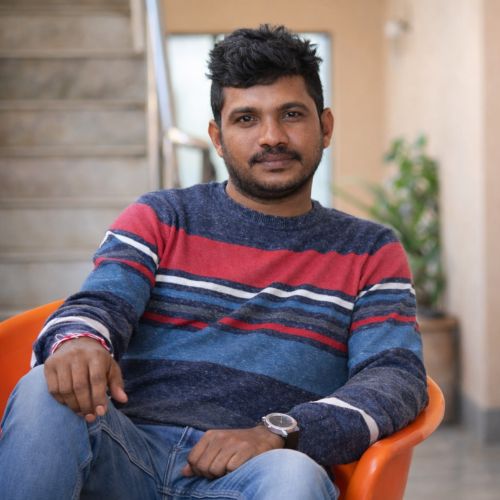
Koti Deva
Digital Marketing Specialist
Koti is a Digital Marketing Specialist with over 10 years of experience and the co-founder of MCQ Orbit — a free exam prep platform built for Indian competitive exam aspirants.
With strong personal knowledge in Quantitative Aptitude, Logical Reasoning, and Mathematics, Koti has a deep understanding of what it takes to crack exams like SSC CGL, IBPS PO, SBI Clerk, UPSC Prelims, NEET, and JEE. Having followed these exams closely for years, he understands the exact topics, patterns, and shortcuts that matter most.
MCQ Orbit was born from a simple desire — to build a platform where every aspirant in India can practice quality MCQs, read reliable current affairs, and prepare confidently, without paying a rupee. Koti combines his digital expertise with his passion for competitive exams to create content that is accurate, practical, and genuinely useful for students.
His mission is straightforward: if the right guidance had been freely available earlier, more students would have cracked their dream exams. MCQ Orbit is his way of making that happen.
Comments
No comments yet.