Current Affairs 13 June 2026 | 13th June 2026 Current Affairs | Daily GK Updates
If you've been keeping up with the news this week, June 13 brought together some genuinely heavy stories — stories that sit at the intersection of India's energy crisis, student welfare, workers' rights, and the environmental cost of the AI boom. Indian seafarers are losing their lives in the Strait of Hormuz. The Supreme Court is demanding answers on student suicides. The International Labour Conference in Geneva just wrapped up with India making some bold claims. And AI data centres are quietly drinking India's groundwater dry. Let's get into all of it.
Defence & Maritime Security
Indian Seafarers Killed as US Forces Target Tankers Near Hormuz
This is the most urgent story of the day — and one that hits close to home for hundreds of Indian families.
Three Indian crew members were declared dead or missing after the Settebello, a Palau-flagged oil tanker, was targeted by US forces off the Omani coast while allegedly attempting to breach the American naval blockade. A separate vessel, MT Marivex — carrying 24 Indian seafarers — also caught fire south of the Strait of Hormuz after being struck by US naval forces.
These incidents represent a sharp escalation in the human cost of the Strait of Hormuz crisis for India. Since Operation Epic Fury — the US-Israeli coordinated strikes on Iran that began on February 28, 2026 — the IRGC has blocked the Strait, laid sea mines, and attacked merchant shipping. The US simultaneously imposed a naval blockade of Iranian ports from April 13 to May 29, 2026. The result: one of the world's most critical maritime chokepoints, through which roughly 25% of global seaborne oil trade and 20% of LNG passes, has become a war zone.
India's response has been Operation Urja Suraksha — a naval escort operation launched on March 23, 2026 to protect Indian-flagged ships and vessels heading to Indian ports through the Arabian Sea. The Indian Navy has been deploying warships to escort convoys, but the attacks on the Settebello and MT Marivex show how dangerous the situation remains even for ships operating outside the strait's immediate zone.
The legal dimension is significant too. Under the United Nations Convention on the Law of the Sea (UNCLOS), neutral commercial vessels have the right of innocent passage through international waters and straits used for international navigation. Using lethal force against civilian commercial shipping — regardless of suspected sanction-busting activity — raises serious questions under international humanitarian law. India has been pressing this point diplomatically, calling on all parties to respect the safety of civilian seafarers.
India has approximately 22 ships in the Hormuz region with over 600 seafarers, according to statements made by the Ministry of External Affairs. The government has maintained contact with shipping companies and has been facilitating the return of Indian nationals from Iran through coordinated diplomatic channels.
For exam aspirants, this story connects directly to UNCLOS (1982), the right of innocent passage under Article 17, India's maritime security doctrine (SAGAR + Operation Urja Suraksha), and the ongoing West Asia energy crisis.
Operation Urja Suraksha — India's Maritime Escort Operation in Context
Since this operation has become central to India's energy security response, it deserves a proper explanation.
Operation Urja Suraksha (meaning "Energy Protection") is an Indian Navy maritime security operation designed to ensure uninterrupted energy supply to India by escorting Indian-flagged and India-bound ships through the Arabian Sea and approaches to the Strait of Hormuz. It builds on Operation Sankalp — India's earlier maritime patrol framework for the Indian Ocean Region.
The operation reflects a key principle of India's security doctrine — that India's energy security is a core national security interest, not merely an economic one. With 85% of India's crude oil imported and a significant share transiting through or near the Strait, the Navy's role is no longer limited to anti-piracy patrols. It is now a front-line energy security instrument.
Governance & Judiciary
Supreme Court's National Task Force on Student Suicides — A Systemic Indictment
The Supreme Court of India's National Task Force (NTF) on student suicides released its findings on June 13, 2026 — and the picture it paints is deeply uncomfortable for India's higher education system.
The NTF was constituted by the Supreme Court in the case Amit Kumar & Ors v. Union of India (2026), under the chairmanship of former Supreme Court judge Justice S. Ravindra Bhat. Its mandate was to examine the causes of student suicides in higher educational institutions and recommend concrete interventions.
What the NTF found:
The task force's central conclusion is one that educators and mental health professionals have been saying for years — student suicides in India are not primarily a mental health problem. They are a structural problem. The NTF found that suicides stem from a combination of institutional pressures, social exclusion, academic stress, and economic vulnerability — not from individual psychological weakness.
More than 70% of India's higher educational institutions lack full-time mental health professionals, and fewer than 4% have any suicide risk management protocol in place. This is a staggering institutional gap in a country where the pressure of competitive examinations — from NEET to IIT-JEE to UPSC — begins for many students as early as age 13 or 14.
The task force also highlighted something that often goes unsaid in polite educational discourse — social mismatch. There is a significant gap between the diversity of students entering premier institutions (particularly from SC/ST/OBC backgrounds and rural areas) and the faculty composition that teaches them. This social distance creates academic alienation and increases vulnerability to distress, particularly during the crucial first year of college when students are adjusting to a new environment far from their support systems.
The Kota crisis as a backdrop: The coaching hub of Kota, Rajasthan — which sends thousands of JEE and NEET aspirants through factory-style coaching centres every year — has become almost synonymous with student suicide in public discourse. The NTF's findings validate what Kota's numbers have been showing for years, and extend the analysis to IITs, IIMs, central universities, and state institutions.
What the NTF recommended: The task force called for a dedicated statutory framework for suicide prevention in higher educational institutions, mandatory appointment of full-time counsellors in all institutions with more than 300 students, structured peer support programmes, and reform of grading systems to reduce hyper-competitive ranking cultures. It also called for faculty diversity targets aligned with the student population.
International Affairs & Labour
India at the 114th International Labour Conference — Geneva
India's delegation at the 114th International Labour Conference (ILC) in Geneva — led by MoS Labour Shobha Karandlaje — concluded its participation on June 12, 2026, and the outcomes are worth examining carefully, particularly for anyone preparing for UPSC GS Paper II on governance and social justice.
The ILC is the supreme deliberative body of the International Labour Organization (ILO) — the oldest UN specialised agency, established in 1919 under the Treaty of Versailles. It meets annually in June in Geneva, functions as an "international parliament of labour," and has 187 member states. What makes it constitutionally unique is its tripartite structure — each country sends two government delegates, one employer delegate, and one worker delegate, all of whom vote independently. India is a founding member.
What India showcased at Geneva:
India presented its transformation story — emphasising the consolidation of 29 central labour laws into four Labour Codes, the expansion of social protection from 19% coverage in 2015 to 64.3% in 2025 (covering approximately 940 million people according to India's figure), and the role of Digital Public Infrastructure — particularly the e-Shram portal (for unorganised workers) and the National Career Service (NCS) portal — as instruments of labour market governance.
India also highlighted improvements in employment metrics — youth employability rising from 34% in 2014 to over 56% in 2025, unemployment falling from 6% in 2017 to 3.1% in 2025, and women's workforce participation climbing from 22% to 38.8%.
The gaps India acknowledged: To India's credit, the delegation was reasonably candid about implementation challenges. The four Labour Codes — while enacted — have not yet been brought into force because most states have not notified the rules. This means the legal consolidation exists on paper but not yet in practice on the ground. India also acknowledged gaps in gig worker coverage — the rapidly growing platform economy (Swiggy, Zomato, Ola, Uber drivers) operates in a legal grey zone where workers lack the protections that even informal sector workers technically have.
Real wage erosion: One uncomfortable data point — the Consumer Price Index for Industrial Workers (CPI-IW) rose approximately 25% between 2021 and 2026, but delays in revising the base wage (as opposed to the inflation-linked Variable Dearness Allowance, or VDA) meant that real minimum wages have actually eroded for many workers over this period.
The ILC agenda this year specifically included a standard-setting discussion on decent work in the platform economy — directly relevant to India's gig worker challenge and the ongoing debate about whether platform workers should be classified as employees, independent contractors, or a new "dependent contractor" category.
Science, Technology & Environment
AI Data Centres and India's Hidden Water Crisis
Here's a story that connects India's AI ambitions with a resource crisis that millions of ordinary Indians already face every day — and the connection is more direct than most people realise.
A United Nations University report released in June 2026 confirmed that global data centres consumed 448 trillion watt-hours of electricity last year — more than all but 10 countries in the world — and used approximately 1.2 trillion gallons of water in the process. The environmental footprint of global data centres now rivals some of the world's largest national economies in terms of energy, water, and carbon output. The report warns this will double within four years as AI adoption accelerates.
For India, this isn't an abstract global statistic. It is a ground-level crisis playing out in Hyderabad, Mumbai, and Chennai right now.
In Hyderabad's IT hub of Gachibowli, groundwater levels dropped nearly a metre in just three months in early 2026 — driven significantly by the cooling water demands of data centres concentrated in the area. In Mumbai, declining reservoir levels recently forced a 10% water cut across the city. In Chennai, an intense competition between drinking water supply and industrial cooling water is already underway.
Data centres require enormous quantities of water for cooling — the servers that power AI systems generate heat that must be continuously removed. In the absence of advanced cooling technologies, most data centres draw water directly from local groundwater systems. The states of Maharashtra and Telangana have classified data centres as "essential services" — which means in periods of water scarcity, data centres would be prioritised over drinking water and sanitation needs of ordinary citizens. That classification has attracted sharp criticism from civil society groups.
The digital greenwash concern: Companies like Microsoft and Amazon have pledged to become "water positive" by investing in lake and wetland restoration projects in Bengaluru and Hyderabad. Critics have characterised this as potential greenwashing — restoring water bodies in one location does not offset the localised groundwater depletion happening directly beneath the data centre.
India's broader water stress context: India already extracts approximately 251 billion cubic metres of groundwater annually — the world's highest. NASA GRACE satellite data (covered in May 19 current affairs) confirmed Northern India as the world's fastest-depleting groundwater region. Adding large-scale industrial cooling demand to this already over-stressed system is raising serious sustainability questions about India's AI growth model.
The West Asia-AI connection: The ongoing Strait of Hormuz crisis adds another layer of complexity. The World Economic Forum noted in April 2026 that the crisis is also affecting the physical economy of AI — Qatar supplies approximately one-third of the world's helium (essential for semiconductor manufacturing) through LNG processing, and Iranian drone strikes on Qatar's Ras Laffan complex in March 2026 caused helium prices to spike. Bromine — another critical semiconductor input — is also affected, with South Korea sourcing over 90% of its bromine from Israel.
This means the AI infrastructure boom is being squeezed from two directions simultaneously — rising energy costs from the gas supply crisis, and critical materials shortages from regional conflict damage to Gulf industrial facilities.
Economy & Finance
India's Disability Pension System — A Fragmented Gap in the Social Safety Net
The June 13 editorial analysis across major publications focused on India's disability pension system — or more accurately, the absence of a coherent national one.
India currently has no unified national disability pension. What exists instead is a patchwork — the Ministry of Rural Development and the Department of Empowerment of Persons with Disabilities both administer overlapping schemes, with different eligibility criteria, benefit levels, and administrative procedures across states. The result is duplication, delays, and diffused accountability.
To put this in context: India allocates ₹2.05 lakh crore for food subsidies, ₹1.80 lakh crore for rural development, and ₹1.72 lakh crore in tax concessions annually. Disability pensions receive a tiny fraction of public expenditure by comparison — even though an estimated 2.21% of India's population lives with some form of disability (Census 2011 data, likely an undercount).
What other countries do: South Africa's SASSA (South African Social Security Agency) provides a uniform national disability grant. Brazil's BPC (Benefício de Prestação Continuada) guarantees a national minimum income for people with disabilities. Australia's NDIA (National Disability Insurance Agency) operates a nationwide disability support system. All three demonstrate that a centralised standard is both financially feasible and operationally more efficient than fragmented state-level implementation.
The proposed MUDPFR framework: Policy analysts have proposed a Minimum Universal Disability Pension Floor and Rights framework (MUDPFR) — essentially, setting a nationally mandated minimum disability pension that all states must provide, funded jointly by Centre and states, with a single administrative window. The principle is simple: one standard, one system, one nation. The editorial consensus is that pension alone is insufficient — it must be integrated with employment support, drawing from global models like the UK's Access to Work programme and employer tax incentives used in countries like Nigeria.
Environment & Ecology
Strait of Hormuz Crisis — Environmental Damage to the Persian Gulf
Beyond the energy and human cost, the 2026 Hormuz crisis is causing significant environmental damage to the Persian Gulf's fragile marine ecosystem — a dimension that rarely makes headlines but is critically important.
Sea mines laid in the Strait, oil spills from damaged tankers, and the burning of fuel from targeted vessels are contaminating one of the world's most biologically productive shallow sea environments. The Persian Gulf hosts unique coral reef systems, extensive seagrass beds, and is a critical habitat for dugongs, sea turtles, and Indo-Pacific bottlenose dolphins.
Oil spills in shallow, warm, enclosed seas like the Persian Gulf are particularly damaging because the oil disperses slowly, temperatures accelerate toxic hydrocarbon release, and there is limited tidal exchange to flush contaminants. The 1991 Gulf War oil spill — where Saddam Hussein deliberately released oil into the Gulf — remains the world's largest deliberate oil spill and its ecosystem effects persisted for over a decade. The 2026 crisis risks adding new contamination to an ecosystem still carrying legacy damage from decades of oil infrastructure and conflict.
Education & Society
Bharat Innovates 2026 — Showcasing India's Startup Revolution
Akashvani's "Bharat Innovates 2026" programme — broadcast on June 13, 2026 — highlighted India's rapidly growing startup ecosystem and its increasing global visibility.
India now has over 140,000 recognised startups (as of mid-2026) — the third largest startup ecosystem in the world after the USA and China. The programme highlighted sectoral diversity — from deep-tech and space-tech (GalaxEye's Mission Drishti, covered in May current affairs) to agri-tech, health-tech, and fintech — as well as the geographic expansion of the startup ecosystem beyond the traditional Bengaluru-Mumbai-Delhi triangle into cities like Pune, Ahmedabad, Hyderabad, Coimbatore, and Jaipur.
The programme also examined the role of DPIIT's Startup India initiative — launched on January 16, 2016 — in creating the policy foundation for this growth. In FY 2025-26, a record 55,200+ startups were recognised under Startup India, with direct job creation rising 36.1% to 4.99 lakh — data covered earlier in April 22 current affairs.
For international readers: India's startup push has been driven by a combination of government policy support, a large domestic consumer market of 1.4 billion people, a massive pool of engineering talent, and the explosive growth of digital payments through UPI — which lowered the barrier to entry for fintech and consumer internet businesses dramatically.
FAQs — 13 June 2026 Current Affairs
Q. What happened to Indian seafarers near the Strait of Hormuz on June 13?
Three Indian crew members were declared dead or missing after the Settebello oil tanker was targeted by US forces off the Omani coast. Separately, MT Marivex — carrying 24 Indian seafarers — caught fire south of the Strait after being struck by US naval forces. India has approximately 22 ships in the region with 600+ seafarers. India's Operation Urja Suraksha (launched March 23, 2026) is providing naval escort to Indian-bound vessels. Under UNCLOS Article 17, neutral commercial vessels have the right of innocent passage through international straits.
Q. What did the Supreme Court's National Task Force on student suicides find?
The NTF, chaired by Justice S. Ravindra Bhat, found that student suicides stem from structural pressures — institutional, social, academic, and economic — not merely individual mental health issues. Over 70% of higher educational institutions lack full-time mental health professionals, and fewer than 4% have suicide risk protocols. Social mismatch between diverse student populations and non-diverse faculty was highlighted as a key vulnerability factor. The NTF recommended statutory frameworks for suicide prevention, mandatory counsellors, and reformed grading systems.
Q. What is the ILC and what did India say at the 114th session?
The International Labour Conference is the supreme body of the ILO — established in 1919 under the Treaty of Versailles. It meets annually in Geneva with a unique tripartite structure (government + employer + worker delegates, all voting independently). India, led by MoS Shobha Karandlaje, showcased the consolidation of 29 labour laws into 4 Labour Codes, social protection expansion from 19% to 64.3% coverage, and DPI tools like e-Shram and NCS portals. However, implementation gaps — particularly the Labour Codes not yet notified by most states — and gig worker coverage were acknowledged.
Q. Why are AI data centres becoming a water security concern in India?
A UN University report confirmed global data centres consumed 448 trillion watt-hours of electricity and 1.2 trillion gallons of water annually — with these figures expected to double within four years. In India, data centres in Hyderabad's Gachibowli saw groundwater drop nearly a metre in three months in early 2026. Maharashtra and Telangana have classified data centres as essential services — meaning they would be prioritised over household water supply during scarcity. India already extracts 251 BCM of groundwater annually, the world's highest, making additional industrial demand a serious sustainability concern.
Q. What is Operation Urja Suraksha?
Operation Urja Suraksha (meaning "Energy Protection") is an Indian Navy maritime security operation launched on March 23, 2026, to protect India's energy supply lines by escorting Indian-flagged ships and India-bound vessels through the Arabian Sea in the aftermath of the 2026 Iran War and Strait of Hormuz crisis. It builds on the earlier Operation Sankalp maritime patrol framework and reflects India's policy of treating energy security as a core national security interest.
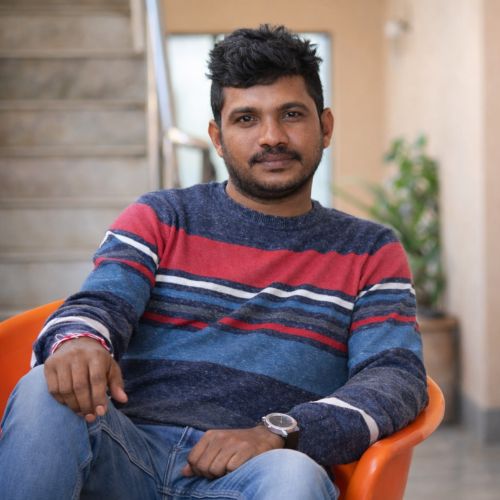
Written by
Koti Deva
Digital Marketing Specialist
Koti is a Digital Marketing Specialist with over 10 years of experience and the co-founder of MCQ Orbit — a free exam prep platform built for Indian competitive exam aspirants.
With strong personal knowledge in Quantitative Aptitude, Logical Reasoning, and Mathematics, Koti has a deep understanding of what it takes to crack exams like SSC CGL, IBPS PO, SBI Clerk, UPSC Prelims, NEET, and JEE. Having followed these exams closely for years, he understands the exact topics, patterns, and shortcuts that matter most.
MCQ Orbit was born from a simple desire — to build a platform where every aspirant in India can practice quality MCQs, read reliable current affairs, and prepare confidently, without paying a rupee. Koti combines his digital expertise with his passion for competitive exams to create content that is accurate, practical, and genuinely useful for students.
His mission is straightforward: if the right guidance had been freely available earlier, more students would have cracked their dream exams. MCQ Orbit is his way of making that happen.
Comments
No comments yet.