
15 Natural Gut Health Remedies That Actually Work (Backed by What Your Digestive System Is Telling You)
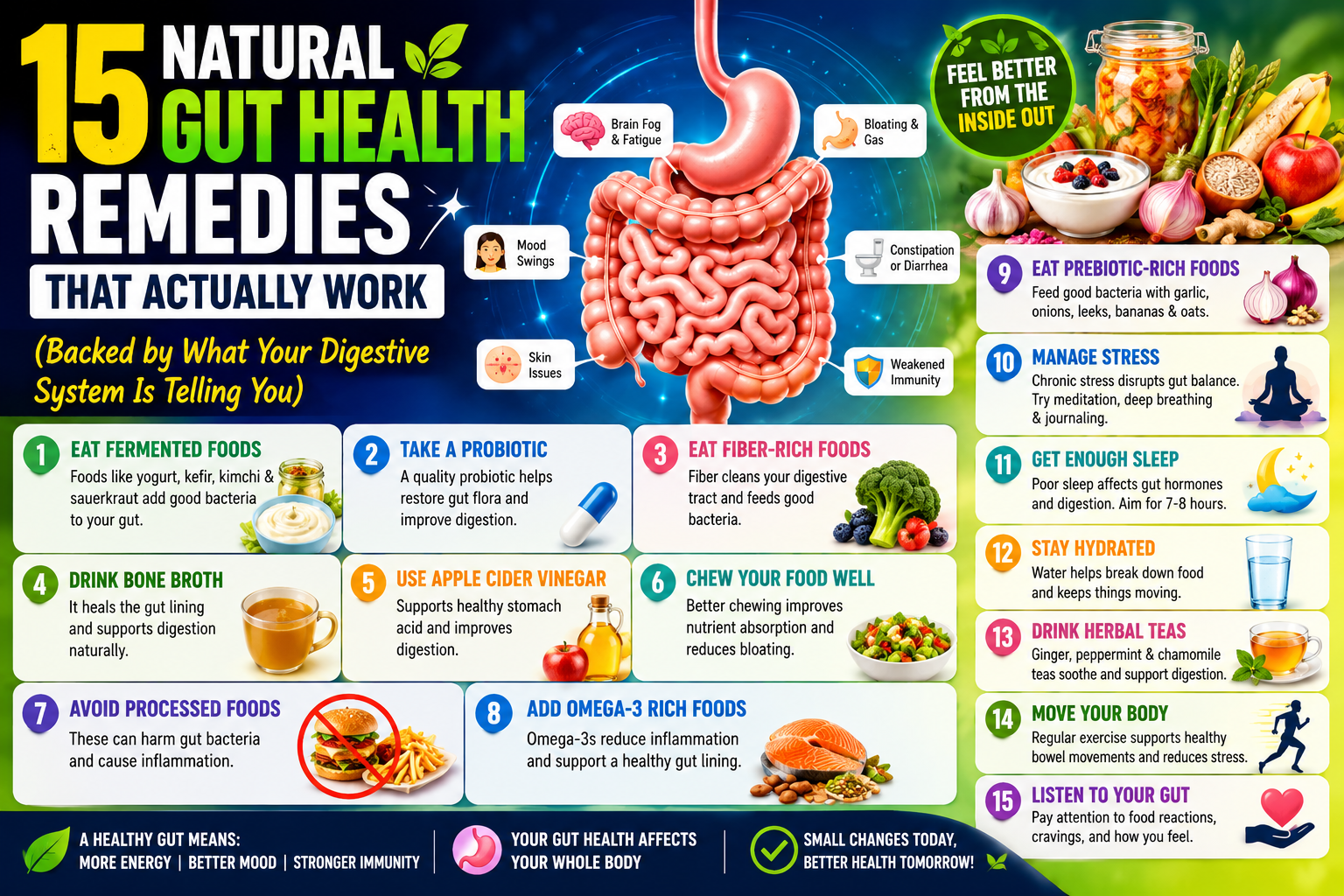
You know that feeling after a big meal when your stomach feels like it's fighting a small war? Or the 3 PM slump that hits no matter how much coffee you drink? Or waking up puffy for no reason?
There's a decent chance your gut is trying to tell you something.
Gut health has gone from a niche wellness topic to one of the most searched health terms in the country, and for good reason. Scientists keep finding new connections between the trillions of bacteria living in your intestines and things that seem completely unrelated: your mood, your sleep, your skin, even how sharp your thinking feels on a given day. This connection has a name the gut-brain axis and it's rewriting how we think about digestion.
The good news is you don't need an expensive supplement stack or a restrictive diet to support your gut. Some of the most effective fixes are things you can start today, with food that's already in your kitchen. Let's get into it.
What "Gut Health" Actually Means
Your gut isn't just a tube that digests food. It's home to your microbiome a community of bacteria, fungi, and other microorganisms that outnumber your own cells. A healthy microbiome is diverse, meaning it has many different types of bacteria doing many different jobs: breaking down fiber, producing vitamins, regulating inflammation, and even manufacturing neurotransmitters like serotonin.
Here's a number that surprises most people: roughly 90 percent of your body's serotonin, the chemical tied to mood and happiness, is produced in your gut, not your brain. That single fact explains why so many people notice their anxiety, focus, and sleep improve when they fix their digestion, and why gut health and mental wellness keep showing up together in health conversations lately.
When your gut bacteria fall out of balance, a state researchers call dysbiosis, you tend to notice it through:
Bloating, gas, or a stomach that feels "off" after eating
Irregular bowel movements (too frequent or too rare)
Constant fatigue that sleep doesn't fix
Skin flare-ups like acne or eczema
Sugar cravings that feel impossible to control
Getting sick often, since a large chunk of your immune system lives in your gut lining
Brain fog or trouble concentrating
If a few of those sound familiar, don't panic. Gut imbalance is common, and it's also one of the more fixable health issues out there, especially with the natural approaches below.
Why Natural Remedies Are Having a Moment
Search interest in gut health has climbed steadily over the past few years, and a big driver is the gut-brain connection. People are realizing that fixing digestion isn't just about avoiding an upset stomach. It's tied to energy, mental clarity, weight management, and immunity. That's pulled gut health out of the "digestive issues" box and into the center of general wellness conversations, right alongside sleep optimization and strength training.
There's also a growing preference for food-based, natural fixes over quick pharmaceutical patches. That doesn't mean medication never has a place (it absolutely does for diagnosed conditions), but for everyday bloating, sluggish digestion, and low-grade gut imbalance, small consistent habits tend to outperform anything you can swallow in a single dose.
15 Natural Remedies to Support Your Gut
1. Eat Fermented Foods Daily
Fermented foods contain live, active bacterial cultures called probiotics that add beneficial bacteria straight to your gut. Think yogurt with live cultures, kefir, sauerkraut, kimchi, miso, and kombucha.
Start small. A quarter cup of kimchi or a small glass of kefir is plenty to begin. Adding too much too fast can cause gas as your gut adjusts to the new bacteria.
2. Feed Your Bacteria With Prebiotic Fiber
If probiotics are the seeds, prebiotics are the fertilizer. Prebiotic fiber is a type of carbohydrate your body can't digest, so it travels straight to your gut bacteria, which ferment it and thrive on it.
Good sources include garlic, onions, leeks, asparagus, bananas (especially slightly underripe ones), oats, and Jerusalem artichokes. Pairing probiotic foods with prebiotic foods, like yogurt topped with banana and oats, gives your gut bacteria both the reinforcements and the fuel they need.
3. Diversify Your Plate, Not Just Your Plants
One of the most repeated findings in gut research over the past several years is that variety matters more than any single "superfood." Studies looking at the American Gut Project found that people who ate 30 or more different plant types per week had noticeably more diverse gut bacteria than people who ate 10 or fewer, regardless of whether they were vegetarian or not.
Practically, this means rotating your vegetables, fruits, whole grains, nuts, seeds, and legumes throughout the week instead of eating the same salad every day. Variety, not perfection, is the goal.
4. Slow Down and Chew Properly
Digestion actually starts in your mouth. Chewing breaks food into smaller particles and mixes it with enzymes in your saliva that begin breaking down carbohydrates before food even reaches your stomach.
Eating quickly, at your desk, or while scrolling your phone means you swallow larger food particles and more air, both of which contribute to bloating and indigestion. Try chewing each bite around 20 times and see how different your stomach feels afterward.
5. Stay Consistently Hydrated
Water helps break down food so your body can absorb nutrients, and it keeps things moving through your intestines. Chronic mild dehydration is one of the most overlooked causes of constipation.
A simple habit: drink a full glass of water first thing in the morning before coffee. It helps kickstart your digestive system after hours of no fluid intake overnight.
6. Manage Stress on Purpose
Your gut and your brain are in constant two-way communication through something called the vagus nerve. This is why stress can trigger stomachaches, and why chronic anxiety often shows up as digestive problems, not just as racing thoughts.
Simple, low-effort stress tools that support your gut include:
Five minutes of slow breathing before meals
A short walk after eating instead of sitting immediately
Journaling before bed to offload racing thoughts
Even just stepping outside for fresh air during a stressful workday
You don't need a 45-minute meditation practice for this to help. Consistency beats intensity here.
7. Prioritize Sleep
Your gut bacteria actually follow a circadian rhythm, similar to the rest of your body. Poor sleep has been linked to reduced microbial diversity and increased gut permeability, sometimes described as "leaky gut," where the lining of your intestines becomes more porous than it should be.
Aiming for a consistent sleep and wake time, even on weekends, supports your gut bacteria's natural rhythm just as much as it supports your energy levels.
8. Try Ginger for Digestive Discomfort
Ginger has been used for centuries to calm an upset stomach, and there's real research behind it. Ginger speeds up stomach emptying and reduces feelings of nausea and bloating. A cup of fresh ginger tea after a heavy meal, or a few slices of ginger steeped in hot water, can noticeably ease that overstuffed feeling.
9. Add Peppermint for Bloating and Cramping
Peppermint relaxes the muscles of the digestive tract, which is why peppermint tea or enteric-coated peppermint oil capsules are commonly recommended for bloating, gas, and cramping. Some people find peppermint particularly helpful for symptoms related to irritable bowel syndrome, though anyone with acid reflux should be cautious, since peppermint can relax the valve that keeps stomach acid down.
10. Cut Back on Ultra-Processed Foods
Ultra-processed foods, packed with emulsifiers, artificial sweeteners, and refined sugar, have been shown in research to reduce the diversity of gut bacteria and promote the growth of less beneficial strains. You don't need to eliminate every packaged food from your life. Start by swapping one processed snack a day for a whole-food option, like trading flavored chips for a handful of nuts and an apple.
11. Limit Alcohol, Especially on an Empty Stomach
Alcohol can irritate the gut lining and disrupt the balance of bacteria, especially when consumed frequently or in large amounts. If you drink, eating beforehand and staying hydrated alongside it reduces the digestive impact considerably.
12. Get Some Sunlight and Movement Outdoors
This one surprises people, but there's growing research connecting time outdoors, sunlight exposure, and even contact with soil and green spaces to a more diverse microbiome. A daily walk outside does double duty: gentle movement helps food move through your intestines, and the change of environment supports microbial diversity in ways an indoor treadmill session doesn't quite replicate.
13. Consider Bone Broth or Collagen
Bone broth contains collagen, gelatin, and amino acids like glutamine, which some research suggests may support the integrity of the gut lining. It's not a miracle cure, but a warm cup of bone broth is a gentle, easy-to-digest way to add nutrients when your stomach feels sensitive.
14. Try Apple Cider Vinegar Cautiously
Apple cider vinegar is a popular natural remedy for bloating and sluggish digestion, with some people finding that a tablespoon diluted in a large glass of water before meals helps. The evidence here is more anecdotal than the other items on this list, and undiluted vinegar can damage tooth enamel and irritate the esophagus, so always dilute it and don't overdo it.
15. Don't Skip Meals Erratically
Irregular eating patterns, skipping meals then overeating later, confuse your digestive rhythm. Your gut, like the rest of your body, thrives on consistency. Eating around similar times each day helps regulate hunger hormones and gives your digestive system a predictable rhythm to work with.
A Simple Sample Day for Gut Health
You don't need to overhaul your entire diet overnight. Here's what a gut-friendly day might realistically look like:
Morning: A glass of water before coffee, then oats topped with banana and a spoonful of yogurt
Midday: A big mixed salad with several different vegetables, chickpeas, olive oil, and a small side of sauerkraut
Afternoon: A short walk outside, an apple with a handful of almonds
Evening: A protein of your choice with roasted vegetables (garlic, onions, and asparagus if you can), and ginger tea afterward if your stomach feels full
This isn't a rigid plan. It's a template you can rotate ingredients through to build both variety and consistency, the two things your gut bacteria respond to best.
Common Gut Health Myths, Cleared Up
Myth: You need an expensive probiotic supplement to fix your gut. Food-based probiotics from fermented foods are often just as effective, and they come with additional nutrients supplements don't offer. Supplements can help in specific situations, but they're not automatically superior.
Myth: "Detoxing" your gut with juice cleanses resets your system. Your liver and kidneys already detoxify your body continuously. Juice cleanses often strip out the fiber your gut bacteria actually need to thrive, which can do more harm than good.
Myth: If you don't have obvious stomach problems, your gut is fine. Gut imbalance often shows up as fatigue, skin issues, or mood changes long before it shows up as an obvious digestive symptom.
Myth: All fiber is the same. Soluble fiber (oats, beans, apples) and insoluble fiber (whole grains, vegetable skins) do different jobs. A healthy gut benefits from both, not just a fiber supplement.
Frequently Asked Questions
How long does it take to improve gut health naturally? Some people notice less bloating within a few days of adding fermented foods and more fiber. Meaningful shifts in microbial diversity generally take a few weeks to a few months of consistent habits.
What is the single best food for gut health? There isn't one. Diversity of plant foods matters more than any single "superfood," though yogurt, kefir, and fiber-rich vegetables are a strong, simple starting point.
Can stress really cause digestive problems? Yes. The gut and brain communicate constantly through the vagus nerve, which is why anxiety and stress frequently show up as stomach pain, nausea, or changes in bowel habits.
Is bloating always a sign of a gut problem? Not always. Occasional bloating after a large or salty meal is normal. Frequent, persistent bloating is worth paying attention to and discussing with a doctor if it continues.
When should I see a doctor instead of trying home remedies? If you experience ongoing severe pain, unexplained weight loss, blood in your stool, or symptoms that don't improve with dietary changes, see a healthcare provider. Natural remedies support everyday digestive wellness, but they aren't a substitute for medical care when something more serious is going on.
The Bottom Line
Your gut doesn't need a dramatic overhaul. It needs consistency: more plant variety, fermented foods, proper hydration, decent sleep, and a little less stress at mealtimes. Start with two or three changes from this list rather than all fifteen at once. Small, sustainable habits, repeated daily, are what actually shift your microbiome over time, not a single perfect day of eating.
This article is for general informational purposes and isn't a substitute for personalized medical advice. If you have persistent digestive symptoms, talk to a doctor or gastroenterologist.

Written by
Nithin Pallepati
Subject Matter Expert
Nithin Pallepati — Pharmaceutical Scientist, Math Expert & Co-Founder of MCQ Orbit
Nithin Pallepati did not set out to build an exam prep platform. He set out to get things right.
With 12 years in pharmaceutical and scientific research, accuracy is not a habit for Nithin, it is a discipline he lives by. Every article, question set, and topic on MCQ Orbit goes through his personal review: fact-checked, cross-referenced against real exam patterns, and held to a researcher's standard before it ever goes live.
His passion for Mathematics and Quantitative Aptitude runs deep, and so does his understanding of what Indian competitive exam aspirants from SSC CGL and IBPS PO to NEET and JEE actually need to succeed.
MCQ Orbit is completely free. No paywalls. No shortcuts on quality. Just reliable preparation built on one simple belief: every student deserves content that is honest, accurate, and worth their time.
Comments
No comments yet.